One-Time Pad
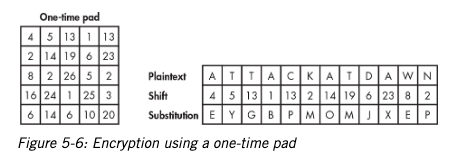
The one-time pad creates two copies of the same pad of paper containing a completely random set of numbers, called shifts, and give one copy to each party. These pads serve as the key. To encrypt, used the shifts to move each letter of the message forward
- aka Vernam’s cipher
- invented in 1917
- unbreakable cipher when used properly
- uses a single-use random key
- key must be of at least the same bit-length of the plaintext
- combines a message with a key read from a paper tape or pad
- primitive version of a stream cipher