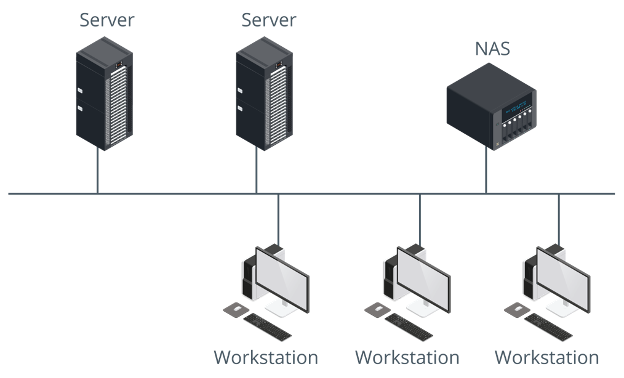
Network Attached Storage (NAS)
A network attached storage (NAS) appliance is a device dedicated to performing a file server role.
- uses a bespoke operating system
- typically based on Linux
- usually operate via a web app
- accessed via an IP address or domain name
- copy or backup operations are performed at file level using an application protocol
- e.g., SMB or FTP
- most NAS devices support some level of RAID
- information is spread between disks so that if one fails, the logical volume and its data will remain available
Drawbacks
- Main drawbacks of NAS is that it shares bandwidth with other network applications
- adding a NAS to an already overwhelmed network:
- increases the network traffic
- may result in unacceptable delays for users and applications to access data
- but it network has adequate bandwidth, then NAS is a quick and easy way of adding shared storage