Domain Name System (DNS)
Domain Name System (DNS) is a global hierarchy of distributed name server databases that contain information about each domain and the hosts within those domains.
- translates human-readable domain names into numerical IP addresses—which computers use to identify one another on a network.
DNS servers direct requests to the appropriate top-level domain (TLD) servers.
DNS resolution is the process of translating a domain name into an IP address.
How it Works
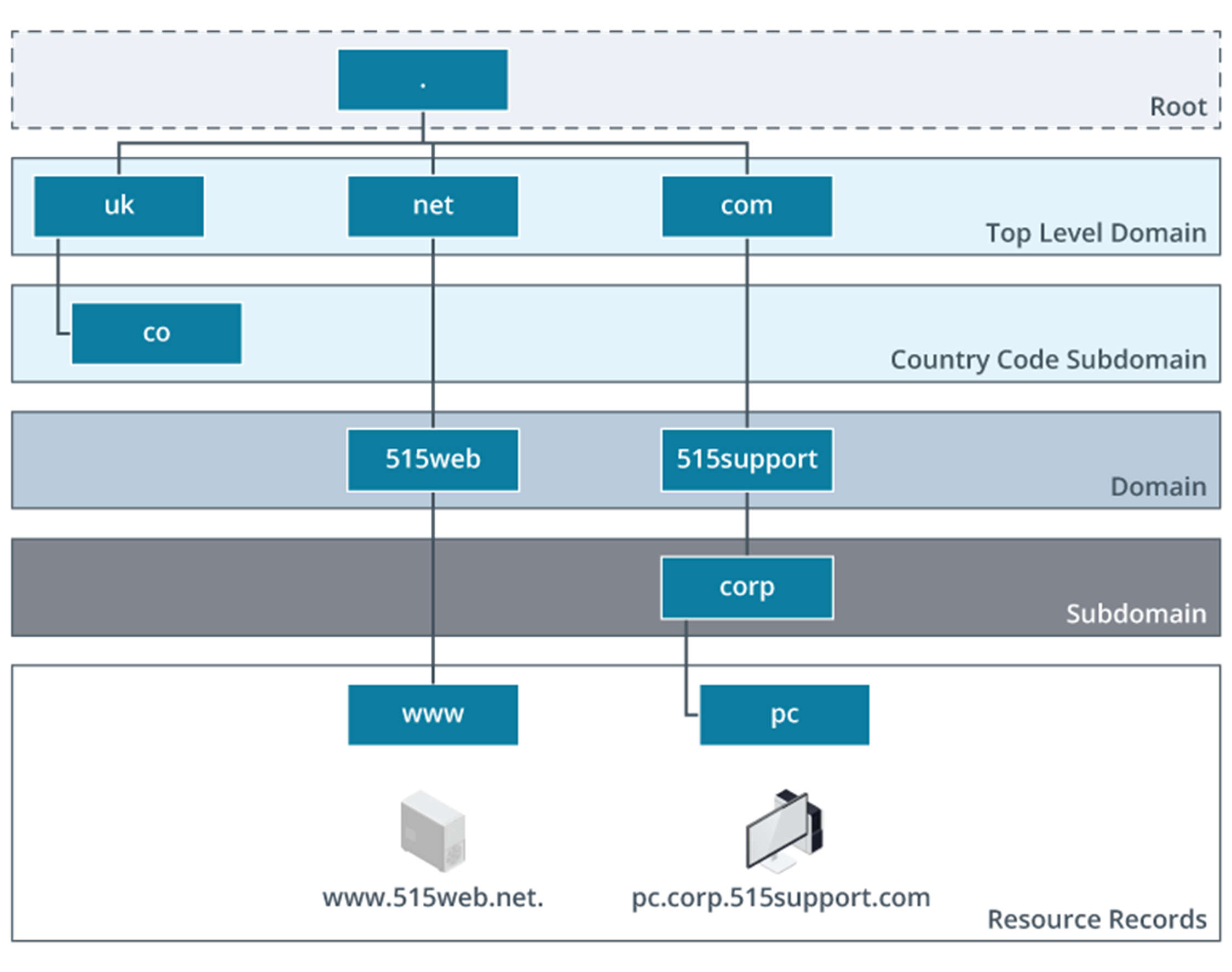
DNS Hierarchy
- FQDNs are assigned and managed using DNS
- organized hierarchically
- top of the DNS hierarchy is the root, which is represented by the null label, consisting of just a period
.- are 13 root identities (A to M) across the globe
- represent over 1,500 individual servers, each providing identical information from the root zone to DNS resolvers all over the world
- are 13 root identities (A to M) across the globe
- below the root lie the top-level domains (TLDs)
- several types of TLDs, but the most prevalent are:
- generic (such as .com, .org, .net, .info, .biz)
- sponsored (such as .gov, .edu)
- country code (such as .uk, .ca, .de)
- several types of TLDs, but the most prevalent are:
- DNS is operated by ICANN (icann.org), which also manages the generic TLDs
- Country codes are generally managed by an organization appointed by the relevant government
- each FQDN reflects this hierarchy:
- from most specific on the left (the host name) to least specific on the right (the TLD followed by the root)
- E.g.,
pc.corp.515support.com.