Digital Signature
A digital signature is a message digest encrypted using the sender’s private key that is appended to a message to authenticate the sender and prove message integrity.
- If the two digests are the same
- data has not been tampered with during transmission, and Alice’s identity is guaranteed
- provides:
- data integrity
- authentication
- nonrepudiation
- identified by the name of the:
- digital signature algorithm
- and underlying cryptographic hash
- e.g. ECDSA-SHA512
Challenge
The primary challenge is that a person needs to trust that the public key actually belongs to the sender.
- trust established by Digital Certificate
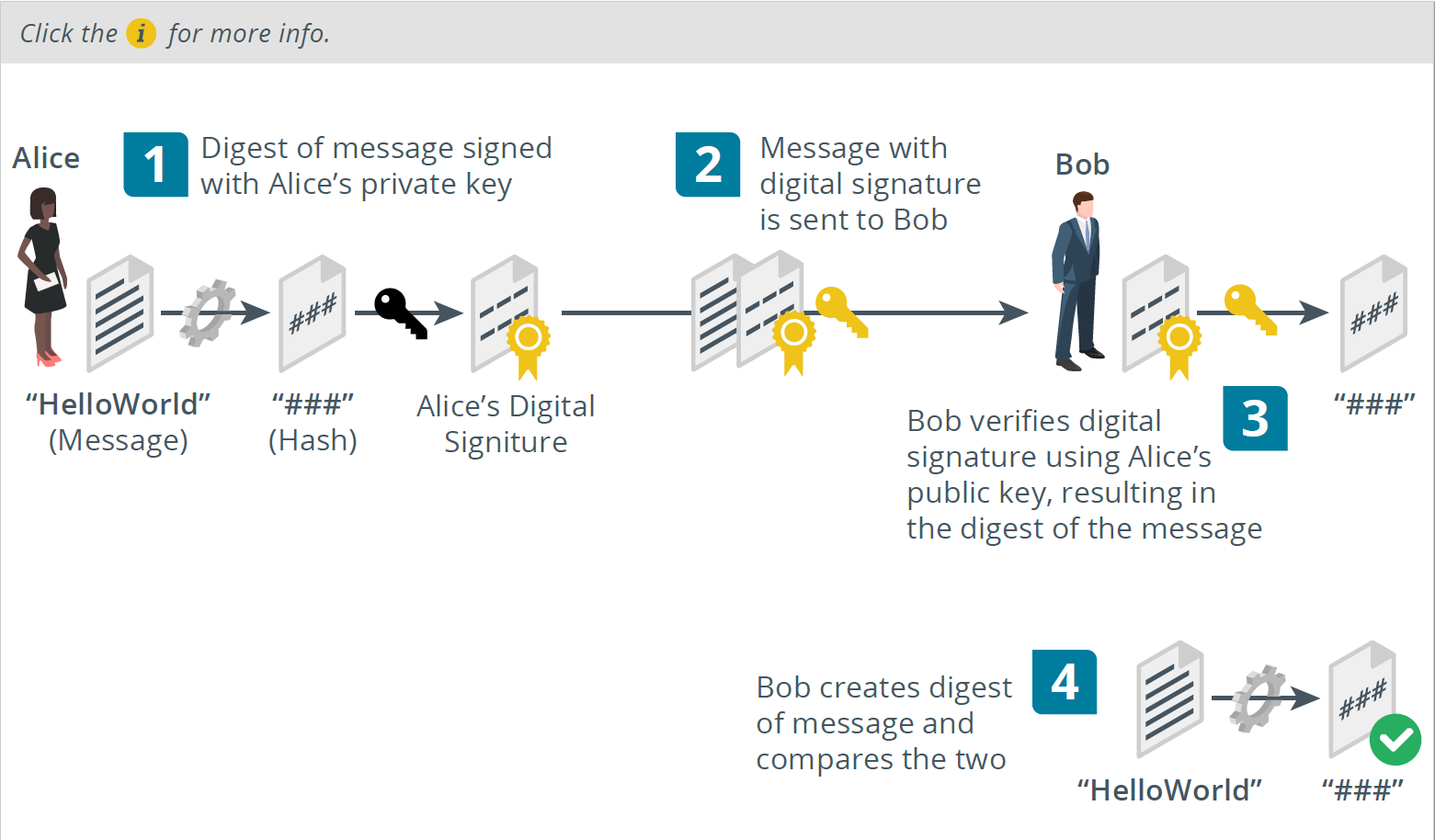
How it Works
- To digitally sign a message:
- sender generates a hash of the message
- called secure message digest
- then uses their private key to encrypt the hash
- this value is their digital signature
- sender sends this digital signature along with the message, appending it to the message itself
- sender generates a hash of the message
- When the message arrives:
- receiver uses the public key corresponding to the sender’s private key to decrypt the digital signature, thus restoring the original hash of the message
- receiver can then verify the message’s integrity by hashing the message again and comparing the two hashes
- Software applications usually do this process for you
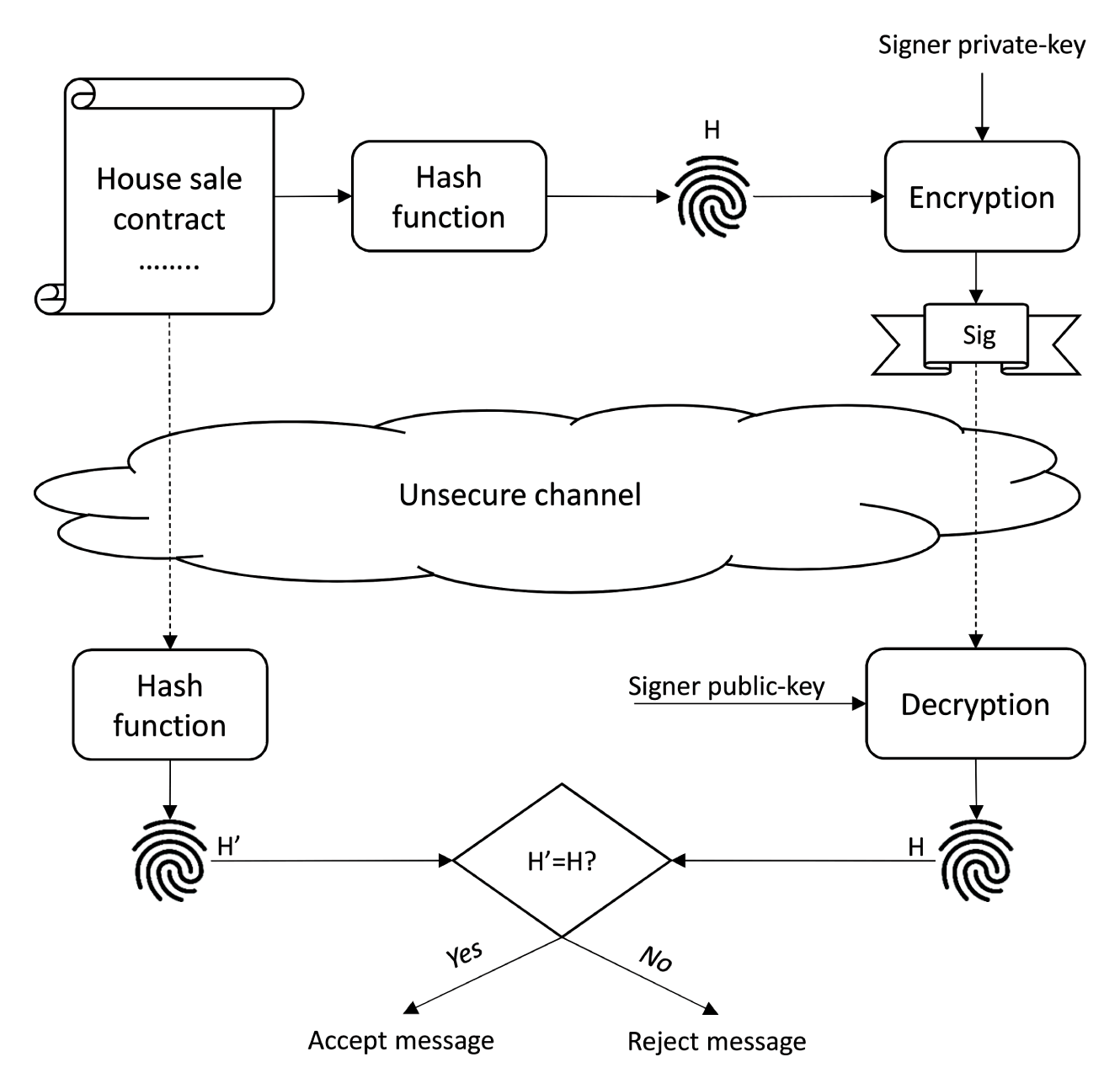
Integrity Protection Provided by Digital Signature
= hash
Methods
- two digital signature methods:
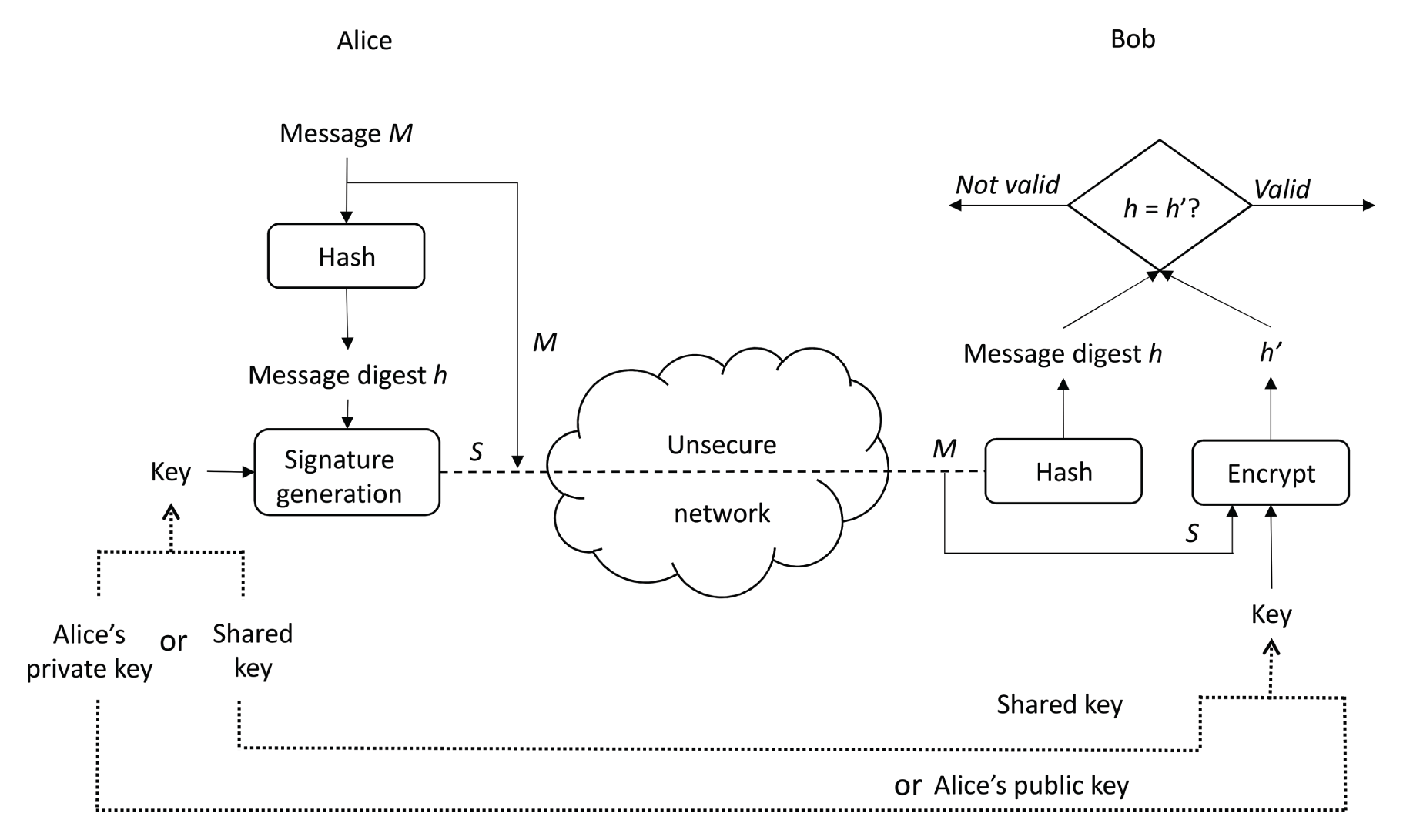
- Signature with appendix
- given message
, the signer generates a signature from the hash of message and sends a pair ( ) - verifier decrypts the signature
to yield a hash , computes , the hash of the received message, then compares both hashes
- given message
- Signature with message recovery
- given message
, all or some of message is embedded in the signature - when the message is entirely embedded, the verification procedure requires only the signature
and recovers from the signature
- given message
- Signature with appendix
Digital Signature with Appendix
Digital Signature Algorithms
There are several standards for creating digital signatures:
- Public Key Cryptography Standard #1 (PKCS#1) defines the use of RSA’s digital signature algorithm
- RSASSA (RSA Signature Scheme with Appendix)
- Digital Signature Algorithm (DSA) uses a variant of ElGamal
- but Elliptic Curve DSA (ECDSA) is now more widely used
- DSA and ECDSA were developed as part of the US government’s Federal Information Processing Standards (FIPS)
Attacks
- attacks against digital signatures can be categorized into 3 groups:
- Universal forgery
- adversary is able to recover the private key of the signer and then signs any message on behalf of the legitimate key owner
- Selective forgery
- adversary is able to create valid signatures for messages of his/her choice
- Existential forgery
- adversary can generate a pair composed of a signature and a message without controlling the message content
- Universal forgery