Security Operations (SecOps)
Security operations (SecOps) is a holistic approach to security that brings people, processes, and technology together to streamline cyberthreat detection, investigation, and response.1
- SecOps teams
- identify and address security risks using a repeatable workflow
- includes:
- alert intake
- triage and investigation
- escalation
- resolution
- and eradication and recovery
- includes:
- embrace a Zero Trust approach
- never trust, always verify
- Zero Trust Architecture (ZTA)
- identify and address security risks using a repeatable workflow
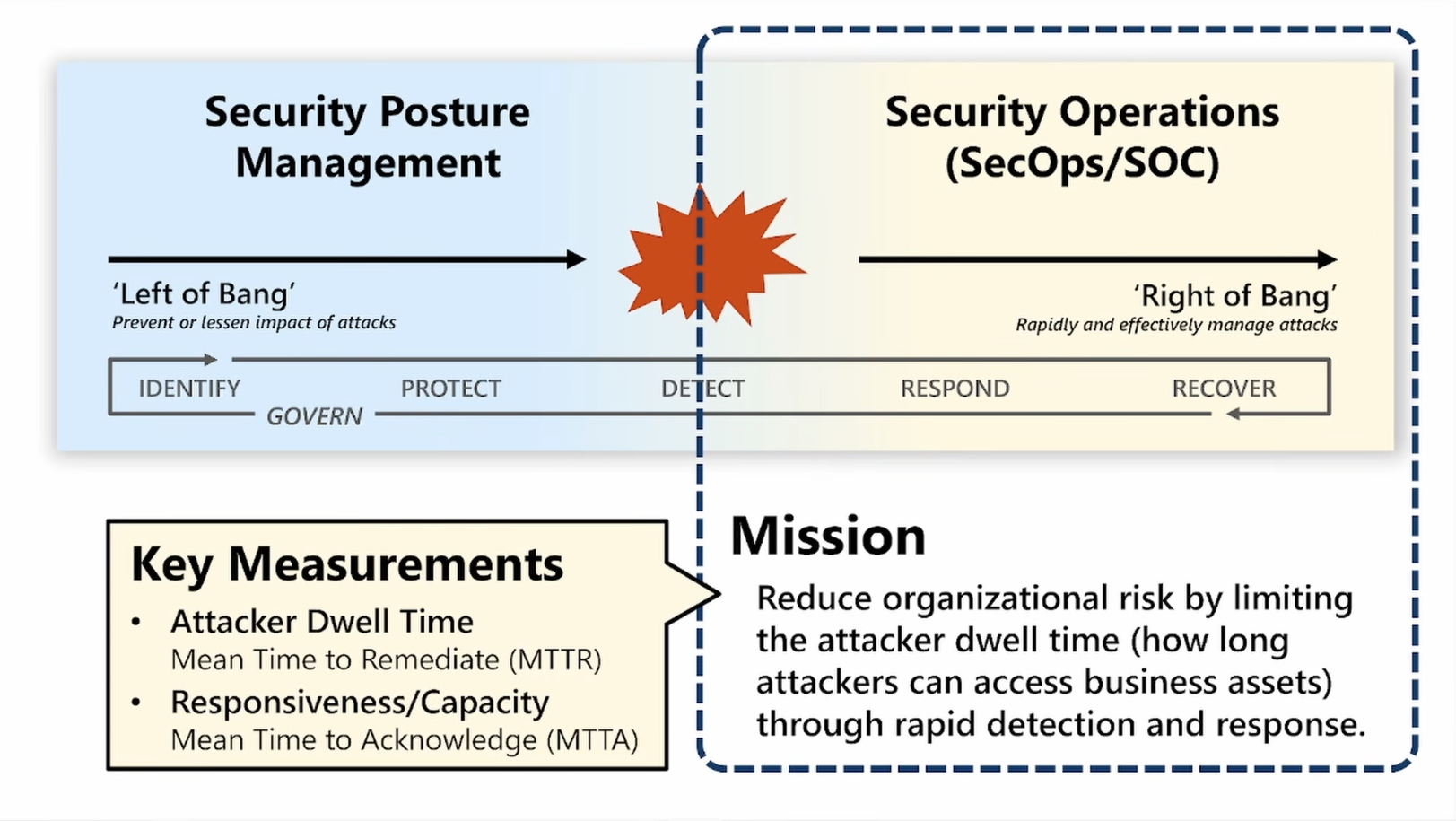
- manages everything right of bang
- bang is the point of attack
Benefits
- Increases visibility into threats across the entire environment
- centralized visibility + automated tools
- Reduces breach impacts
- faster incident detection, triage, and response
- strengthens data loss prevention efforts
- Unifies IT and security teams
- Improves compliance and governance
- Scales defense with advanced tooling
- Reduces costs
- proactively prevent breaches and other incidents
Common Challenges
- high alert volume
- talent shortages
- siloed tools
- lack of visibility
Core Components and Capabilities
- Continuous security operations center (SOC) monitoring
- Threat detection and analytics
- Threat hunting
- proactively hunt for unusual behavior, policy violations, or early IoCs across networks, identities, endpoints, and applications
- Incident response
- Threat intelligence
- collect and analyze threat intel about known adversaries, vulnerabilities, malware, and active campaigns
- Advanced tools:
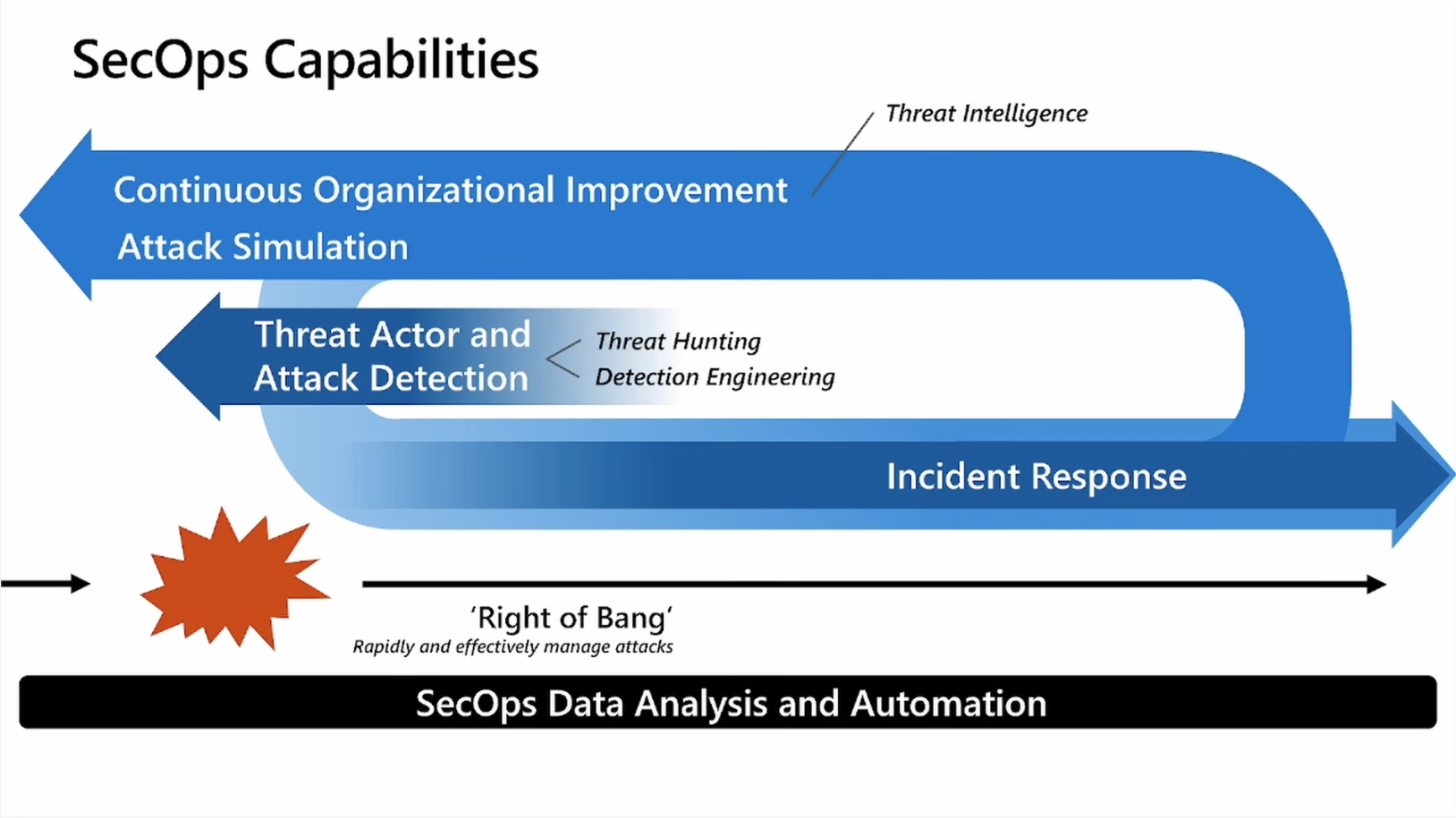
Capabilities are the durable and consistent outcomes SecOps provides.
- provided by people, processes, and technology
- people consist of roles and responsibilities
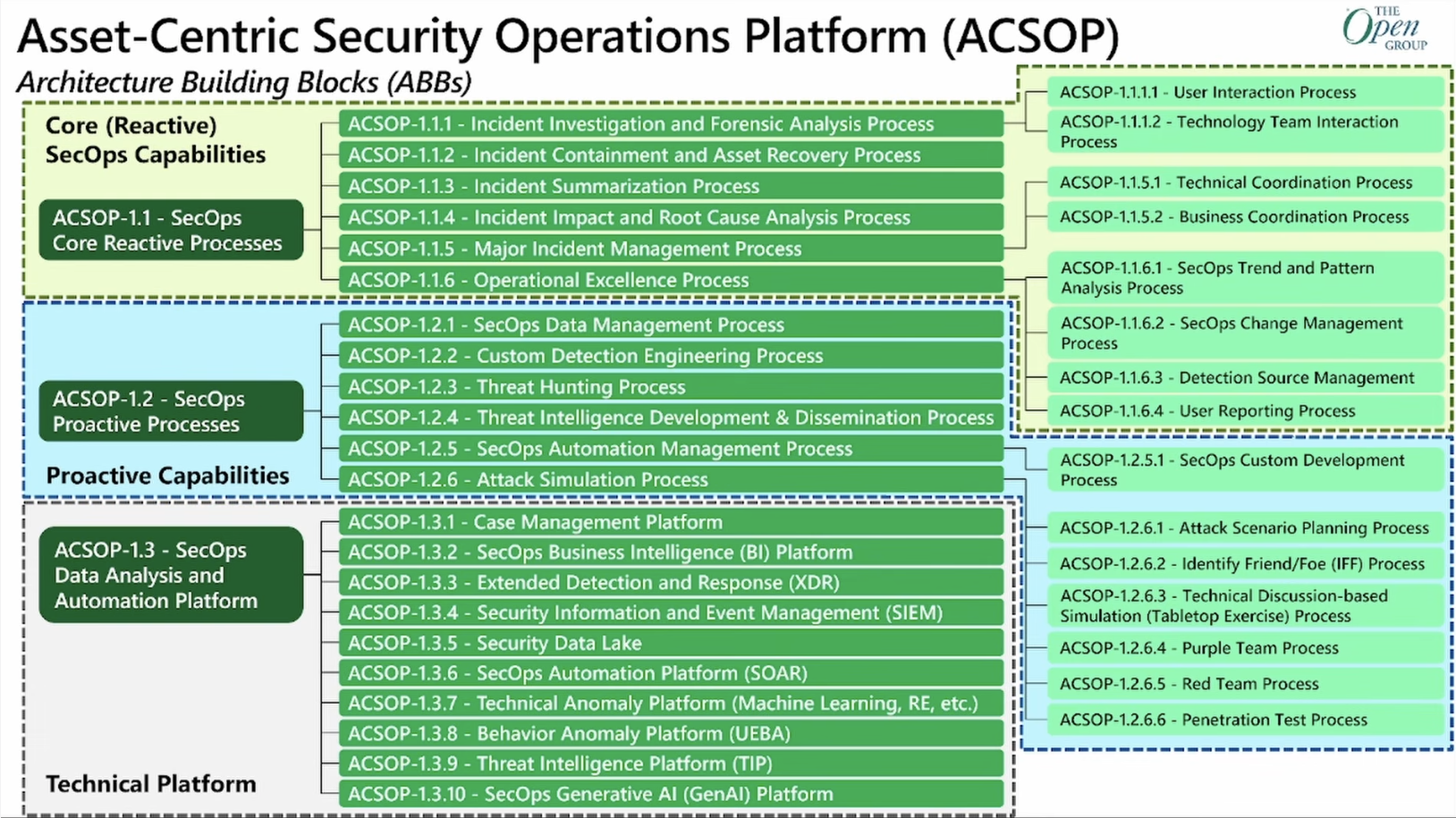
- processes and technology consist of architecture building blocks (ABBs)
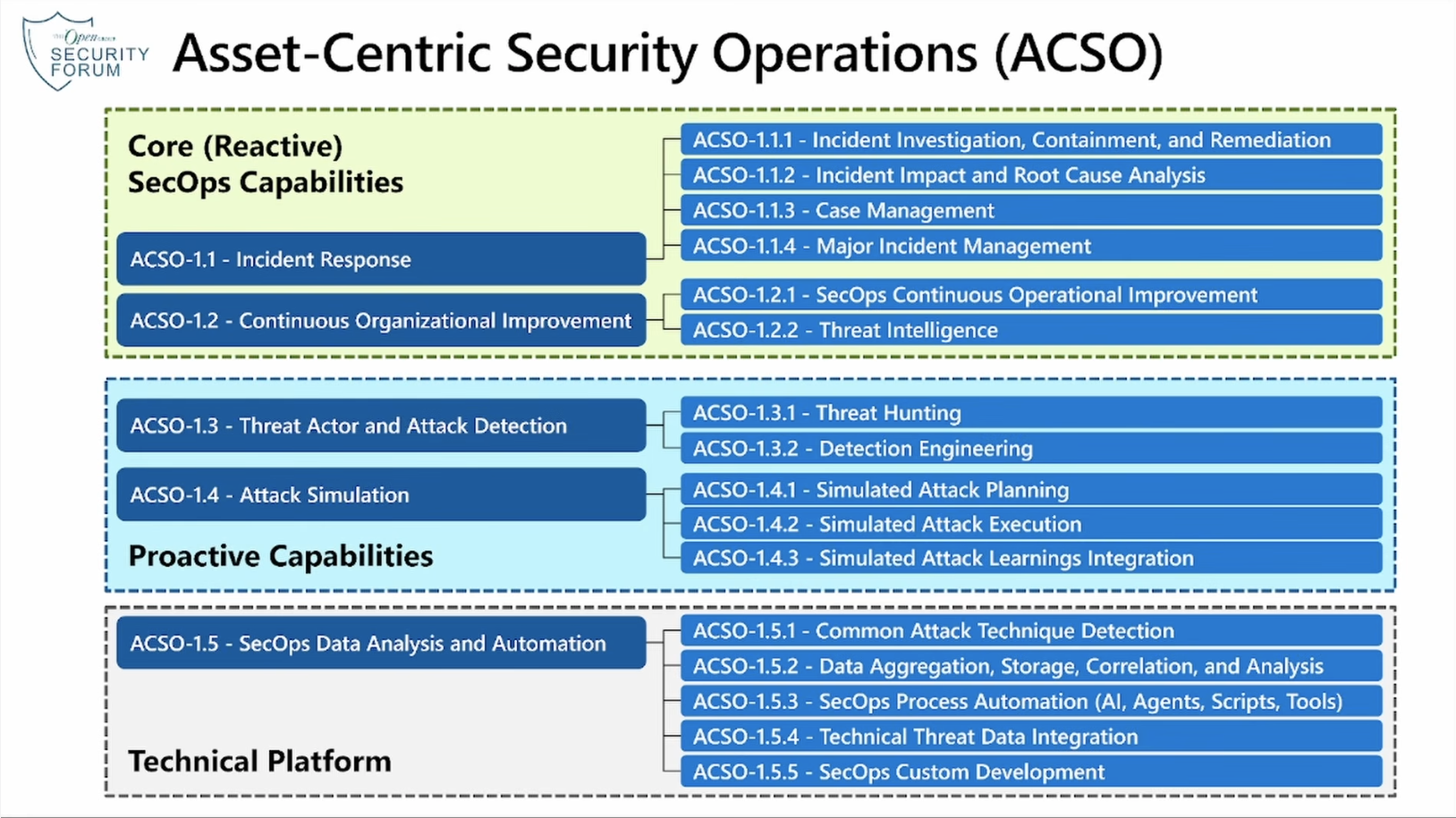
Architecture Building Blocks (ABBs)
Roles and Responsiblities
Day-to-Day Work
- general workflow to identity and address security risk:
- Alert intake
- Triage and investigation
- Escalation
- Resolution
- Eradication and Recovery
- Incident response phases:
- Preparation
- Detection
- Containment
- Eradication
- Recovery
- Successful program combines human expertise with AI-assisted tools and repeatable, automated workflows
- Security engineers and security analysts must work together to plan and create a multilayered security model
- engineer → creates robust security architecture
- analyst → monitors and responds to threats within the architecture
- Proactive activities:
- Threat hunting
- analysts deliberately search for threats
- Vulnerability management
- find and address vulns before threat actor can exploit
- Security awareness and training
- educate users about common tactics cybercriminals use
- create a security-first culture
- Threat hunting
Build a Strong SecOps Program
- Implement Zero Trust Architecture
- Automate repetitive tasks
- Conduct regular tabletop exercises
- Continuously tune detection rules and threat intel sources
- Measure and optimize KPIs
- MTTD + MTTR