Security Policy Framework
A security policy framework contains a series of documents designed to describe the organization’s cybersecurity program.
- scope varies widely
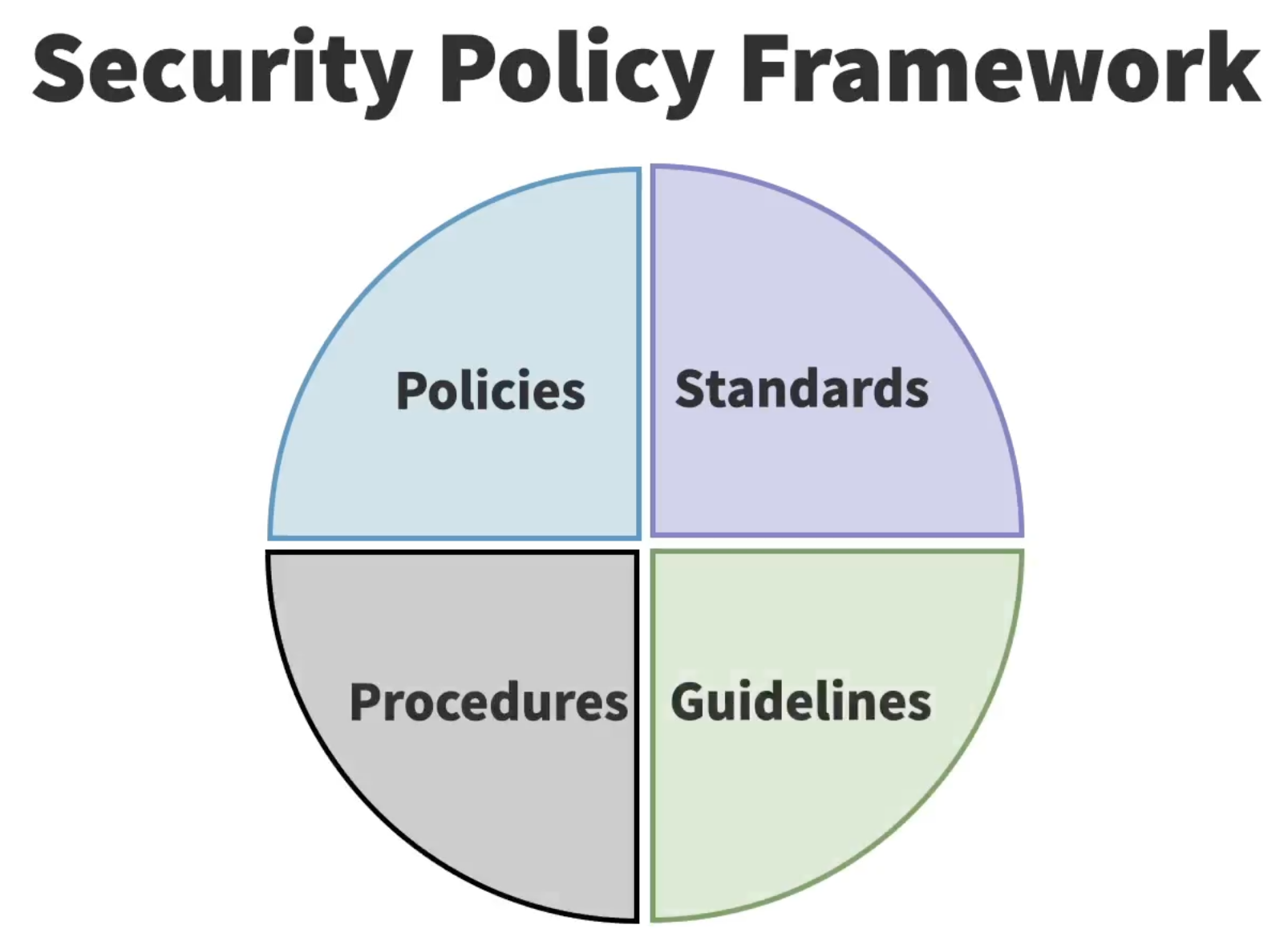
Framework
Security Policies
Policies are broad statements of management intent.
- provide the foundation for a security program
- written carefully over a long period of time
- compliance with policies is mandatory
- approved at the highest levels of the organization
- E.g.,
- too specific:
- “Encrypt sensitive information with AES-256”
- Right level:
- “Encrypt sensitive data in transit and at rest”
- too specific:
Security Standards
Standards provide mandatory requirements describing how an organization will carry out its information security policies.
- Provide specific details of security controls
- Derive authority from policies
- Follow a less rigorous approval process
- Compliance with standards is mandatory
- often use industry best-practice standards
- some regulated industries may require this, otherwise deemed negligent
Security Procedures
Procedures are detailed, step-by-step processes that individuals and organizations must follow in specific circumstances.
- ensure a consistent process for achieving a security objective
- May require compliance depending upon the circumstances
- common procedures:
- Monitoring procedures
- describe how the organization will perform security monitoring activities
- Evidence production procedures
- describe how to respond to subpoenas, court orders, and other legitimate requests to produce digital evidence
- Patching procedures
- describe the frequency and process of applying patches to applications and systems
- Monitoring procedures
Security Guidelines
Guidelines provide best practices and recommendations related to a given concept, technology, or task.
- Provide security advice to the organization
- Follow best practices from industry
- Compliance is not mandatory
- optionality of guidelines may vary, though
Exceptions and Compensating Controls
- provide exception mechanism for rules
- situations occur that require deviation from requirements
- state the specific requirements for receiving an exception and identify the authority to approve exceptions
- many exceptions require compensating controls
- mitigates risk associated with exceptions to security standards