Security Awareness Training Lifecycle
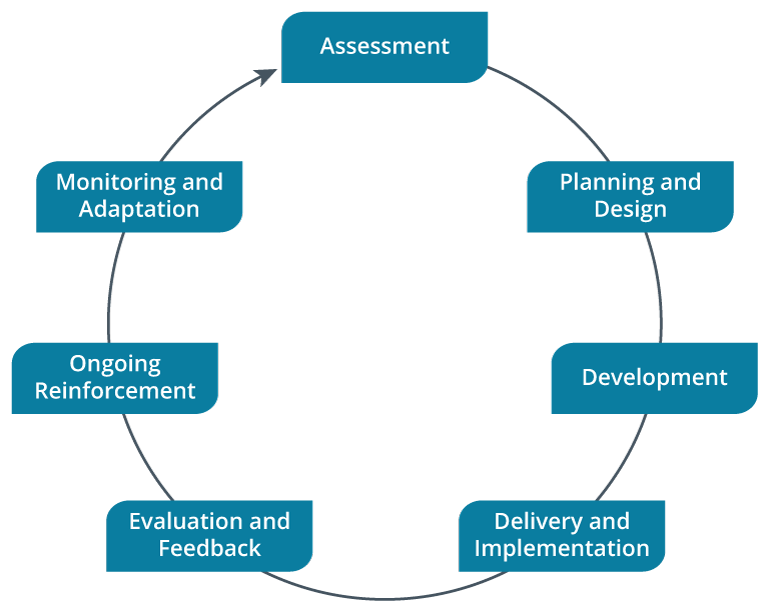
Reporting and Monitoring
- Assessments and Quizzes
- Conducting pre - and post-training assessments and quizzes
- allow organizations to measure the knowledge gained by employees during training
- provide quantitative data regarding training effectiveness related to knowledge retention and comprehension
- Incident Reporting
- track and analyze incident reports to assess the training program’s impact on incident detection and response
- help identify any patterns or trends
- Phishing Simulations
- simulated phishing campaigns helps organizations evaluate employees’ ability to recognize and respond to phishing attempts
- Reports generated from these simulations provide data on click rates, successful phish captures, and trends in susceptibility
- indicate the effectiveness of the training in mitigating phishing risks
- Observations and Feedback
- Managers and supervisors can provide feedback on employees’ security practices and behaviors
- provides valuable insights into the practical application of training and any challenges employees face in implementing the knowledge gained
- Metrics and Performance Indicators
- Tracking relevant metrics provides quantitative data on the impact of security awareness training
- e.g., number of reported incidents, employee compliance with security policies, or changes in password hygiene
- help measure the effectiveness of the training program over time
- Training Completion Rates
- indicates employee engagement and adherence to training requirements
- Higher completion rates suggest better participation and performance of the training content