Network Masks
A 32-bit network mask is used to distinguish the network ID and host ID in an IPv4 address.
- conceals the host ID portion of the IP address
- reveals the network ID portion
- mask and IP address are the same number of bits
- where there is a 1 in the network mask, the corresponding binary digit in the IPv4 address is part of the network ID
- 1s in the mask are always contiguous
- E.g.,
- valid mask:
11111111 11111111 11111111 00000000 - invalid mask:
11111111 00000000 11111111 00000000
- valid mask:
- E.g.,
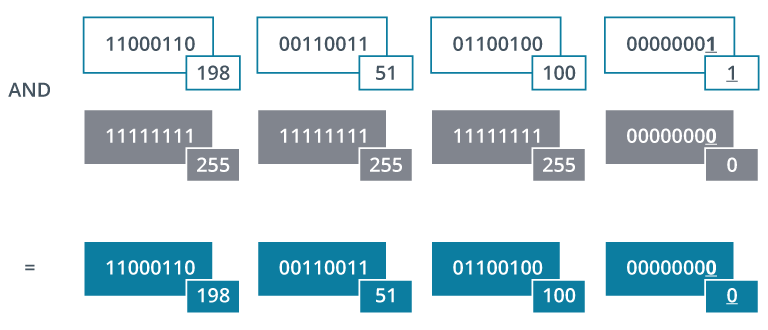
- network ID portion of an IP is revealed by ANDing the mask to the IPv4 address
- when two 1s are ANDed together, the result is 1
- any other combo = 0
Determine the Network ID
host IPv4 address =
198.51.100.1and mask =255.255.255.0
- first convert IP and mask to binary notation
- then AND the two binary numbers
- then convert back to dotted decimal notation
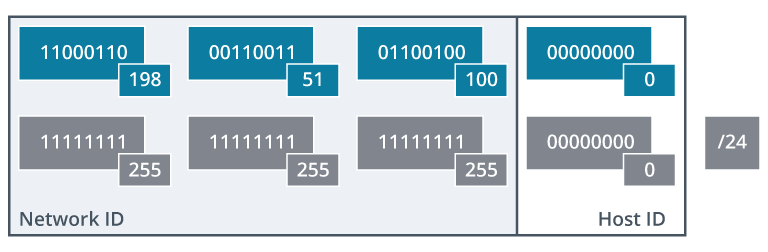
- network can be identified using prefix or slash notation
- prefix is the number of bits set to 1
- E.g.,
198.51.100.0/24
- default masks align with octet boundaries
- values in the dotted decimal mask will be 255 or 0
- E.g., default 24-bit mask:
- 8-bit mask =
255.0.0.0 - 16-bit mask =
255.255.0.0
- longer network portion allows for more network IDs but fewer host IDs
- E.g.,
255.255.255.0 /24network has only 254 possible host addresses/8allows for millions of hosts but only 126 network addresses
- E.g.,