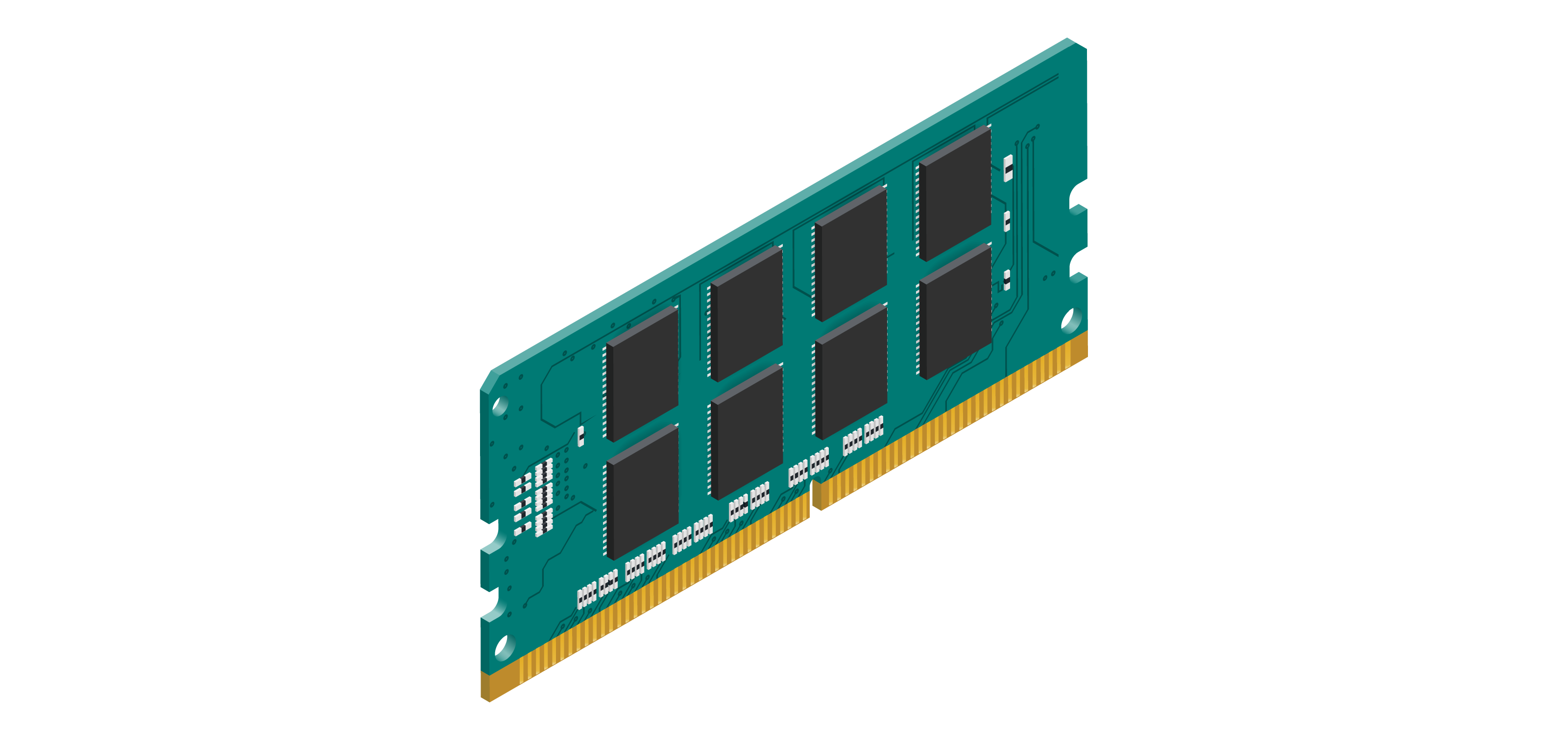
Memory Modules
A memory module is a printed circuit board that holds a group of RAM devices that act as a single unit.
- produced in different capacities
- Each DDR generation sets an upper limit on the maximum possible capacity
Desktop RAM – DIMM
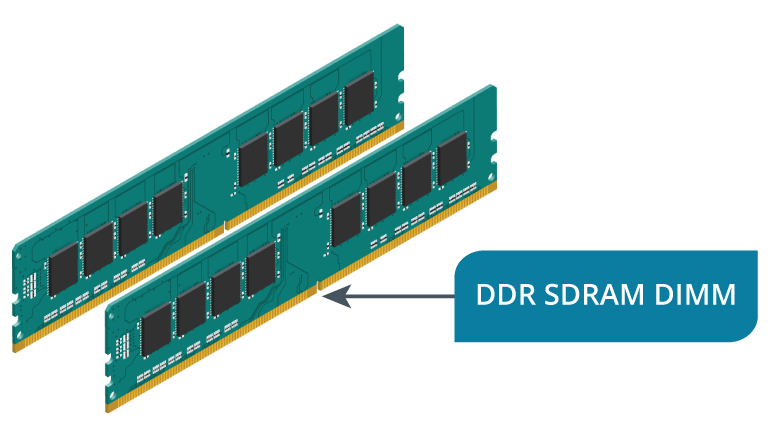
- DDR for desktop system memory is packaged in a form factor called dual inline memory module (DIMM)
- The notches (keys) on the module’s edge connector identify the DDR generation (DDR3/DDR4/DDR5)
- prevent it from being inserted into an incompatible slot or inserted the wrong way around
- DDR DIMMs typically feature heat sinks, due to the use of high clock speeds
Info
- Memory slots look similar to expansion slots but with catches on each end to secure the memory modules
- Memory modules are vulnerable to electrostatic discharge (ESD)
- take anti-ESD precautions when handling and storing
- The DIMM’s DDR type must match the motherboard
- E.g., cannot install DDR5 modules in DDR4 slots
- For best performance
- the modules should be rated at the same bus speed as the motherboard
- It is possible to add modules that are faster or slower than the motherboard slots or mix modules of different speeds
- However, the system will operate only at a speed that is supported by all installed components (memory modules and controller)
- not generally a good idea
Laptop RAM – SODIMM
Laptop RAM is packaged in a smaller form factor called Small Outline DIMM (SODIMM)
- typically fitted into slots that pop up at a 45º angle to allow the DIMM to be inserted or removed