The core of the Internet consists of high bandwidth fiber optic links connecting Internet exchange points (IXPs)
trunk links and IXPs are mostly created by telecommunications companies and academic institutions
Within the datacenter supporting any given IXP, Internet service providers (ISPs) establish high-speed links between their networks, using transit and peering arrangements to carry traffic to and from parts of the Internet they do not physically own
tiered hierarchy of ISPs that reflects to what extent they depend on transit arrangements with other ISPs
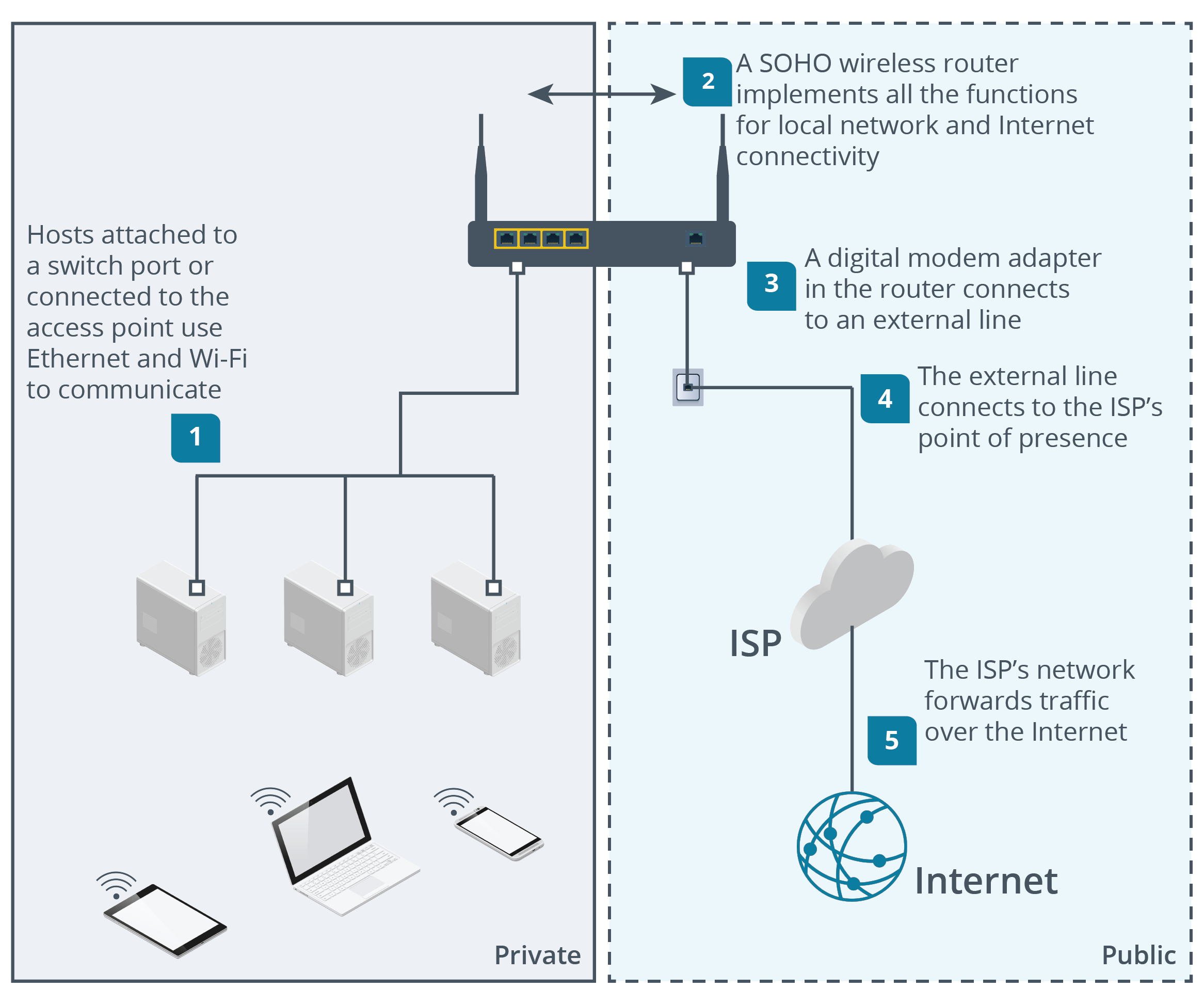
customers connect to the Internet via an ISP’s network
connection to the ISP’s network uses its nearest point of presence (PoP)
E.g., a local telephone exchange
Internet connection type is the media, hardware, and protocols used to link the local network at a domestic residence or small office to the ISP’s PoP
This WAN interface is typically point-to-point
means that there are only two devices connected to the media (unlike Ethernet)
connection to a WAN interface is typically made by a type of digital modem
whereas Ethernet connections are made using NICs and switches
Digital Modem
modem establishes the physical connection to the WAN interface
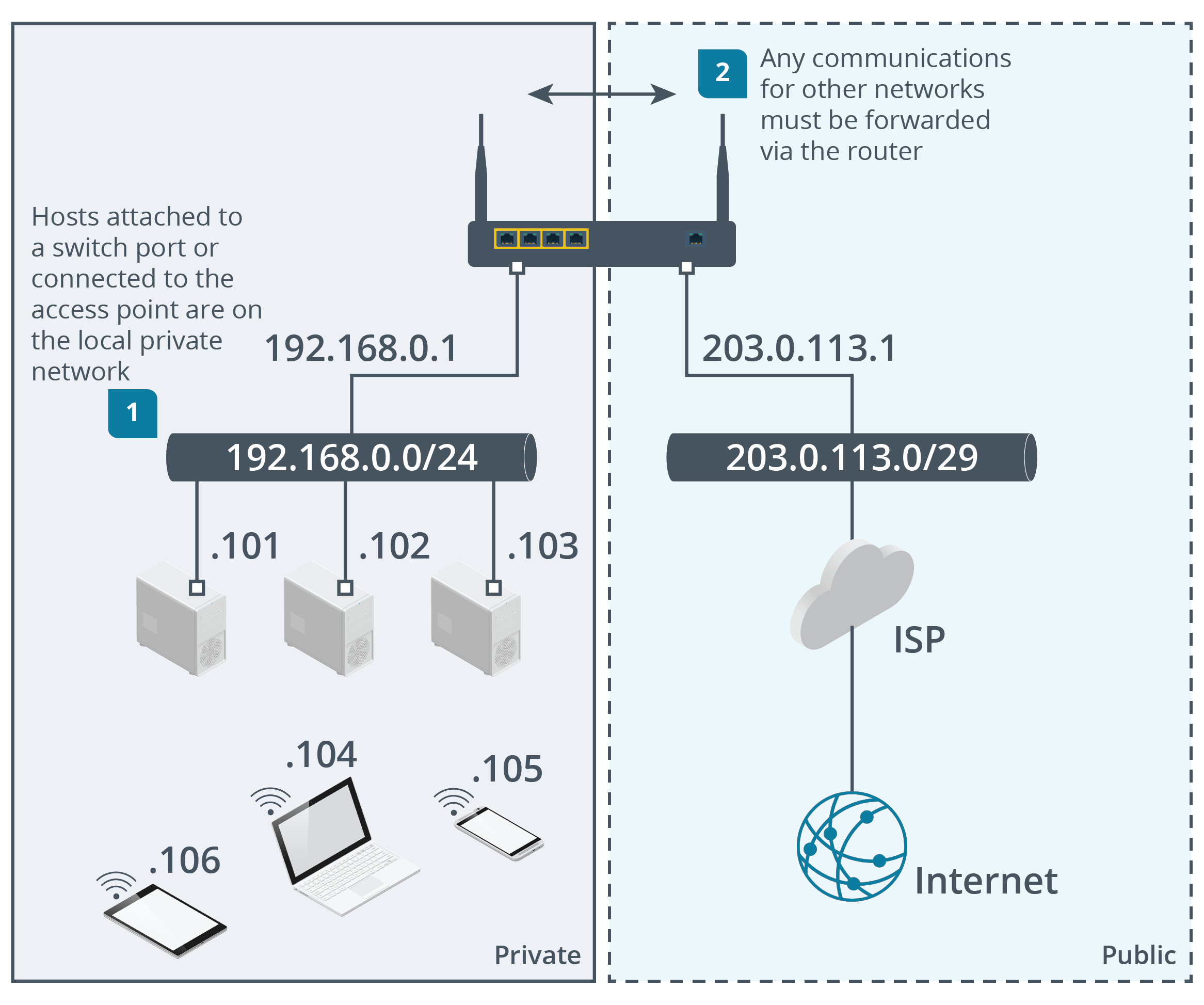
when interconnecting networks, there must also be a means of identifying each network and forwarding data between them
this is performed by a router that implements the Internet Protocol (IP)