Identifying Malicious Activity Example
1. Analyzing Suspicious Activity
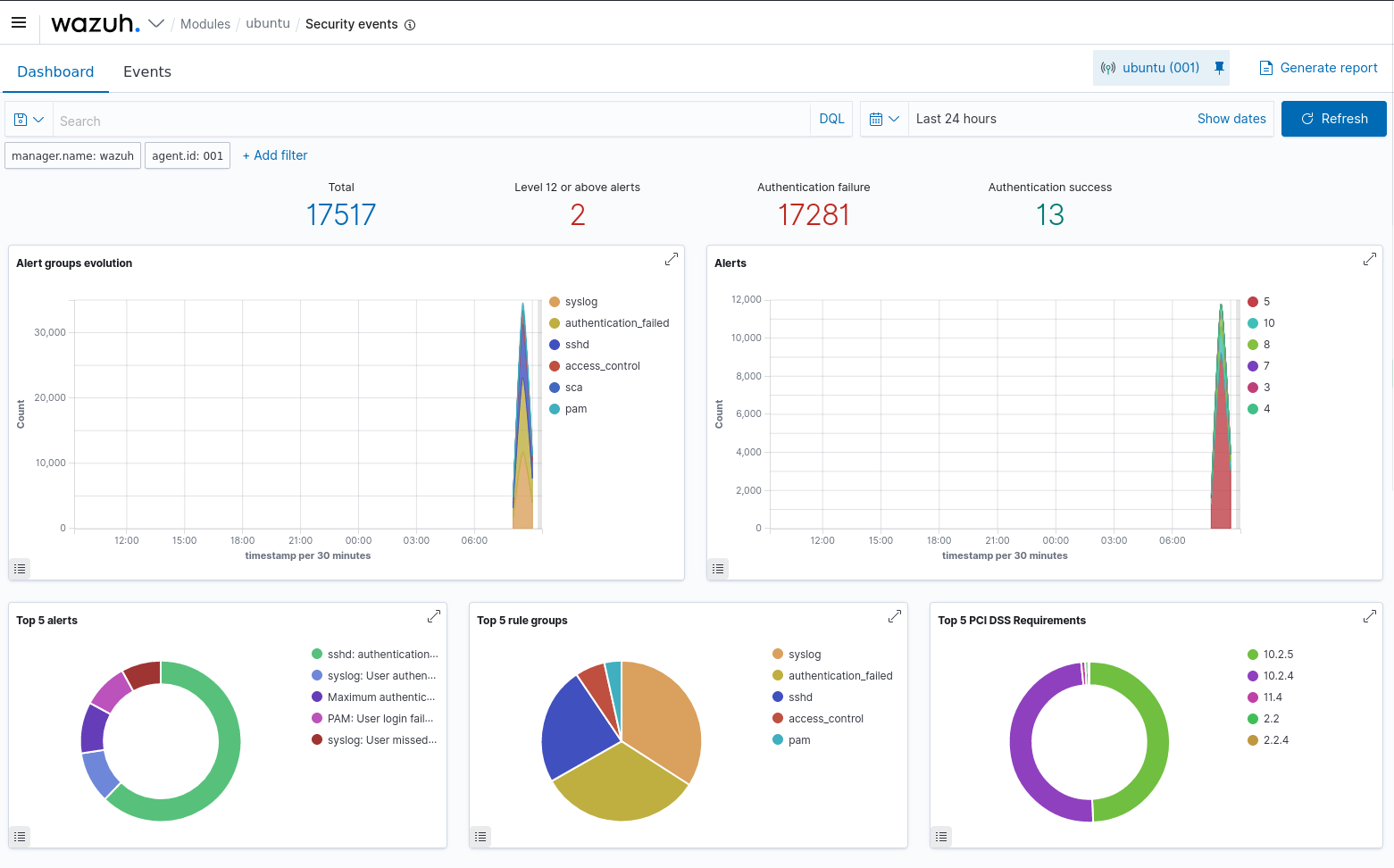
- Observing the SIEM dashboard, we can see:
- spike in the number of authentication failures in trend graphs
- indication of two level 12+ alerts
2. Confirming the Findings
- system indicating the failed logon attempts is a Ubuntu Linux server
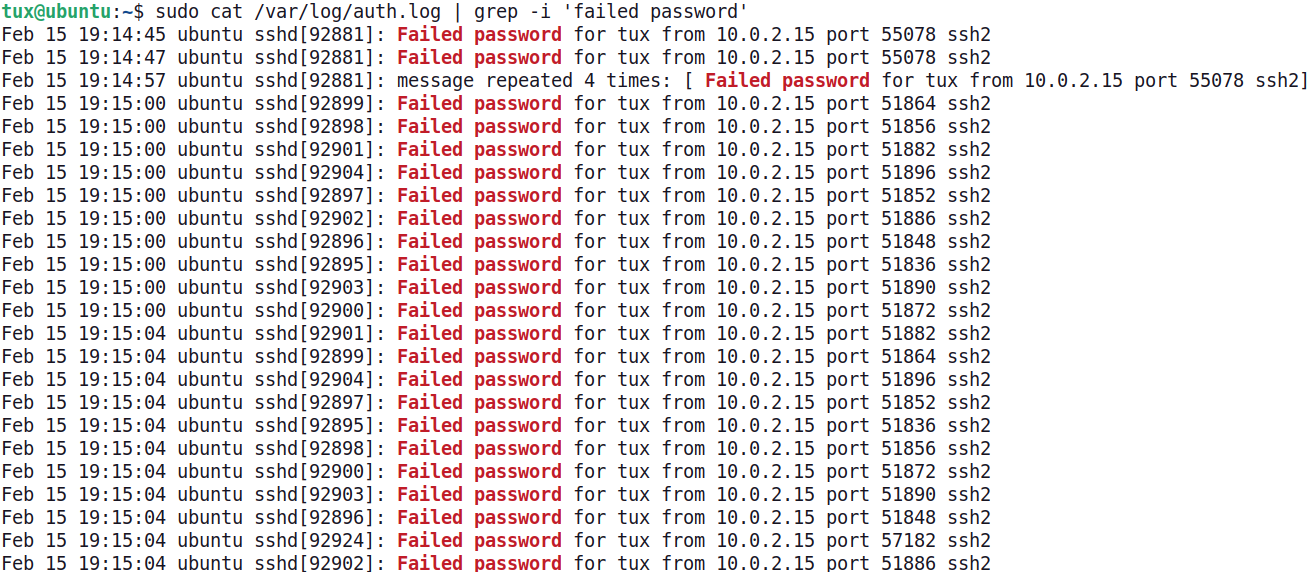
- using command line, the failure events can be confirmed
cat /var/log/auth.log | grep -i 'failed password'
- results indicate the user tux has experienced a password attack
3. Drilling Deeper into the Event
- Returning to the SIEM dashboard and clicking on the authentication failure number filters the view to the matching events
- highlights one of the many benefits of using a SIEM
- Manually reviewing the host’s log file confirmed the events
- but obtaining a clear view of the sequence of events is difficult to accomplish quickly
- this view of the authentication failure events indicates several other problems:
- the password attack was successful
- and that the attacker performed several other tasks after obtaining access
- observe that the attacker’s actions are correlated to known TTPs documented by the MITRE ATT&CK Framework
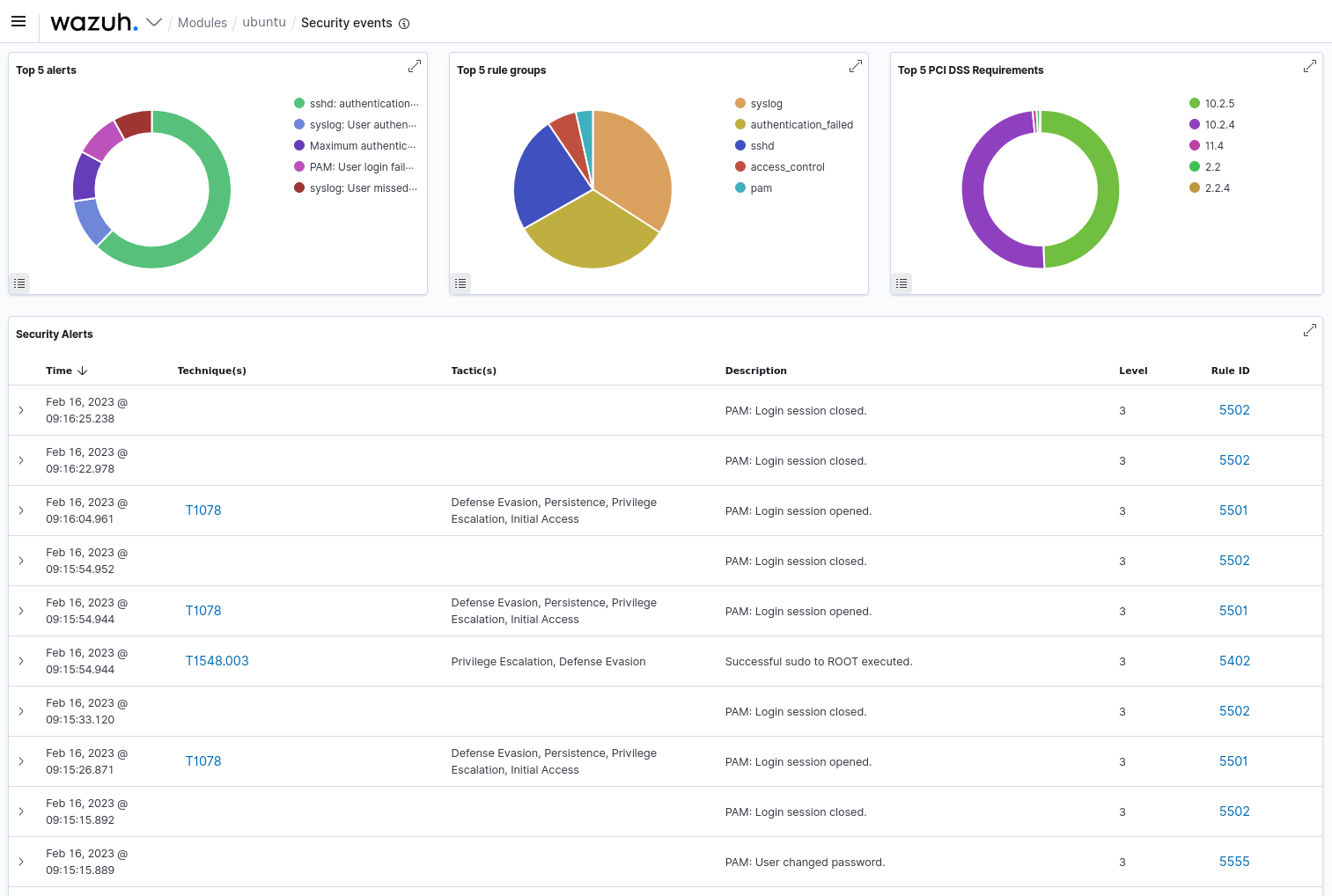
- SIEM has determined that the:
- password attack was successful
- attacker gained access to the server and created a new user

4. Confirming the Findings
- Connecting to the server we can filter
/var/log/auth.log to show only the lines containing the words “new user”
- we see a new user named
hax0r has been created

5. Observing a Backdoor
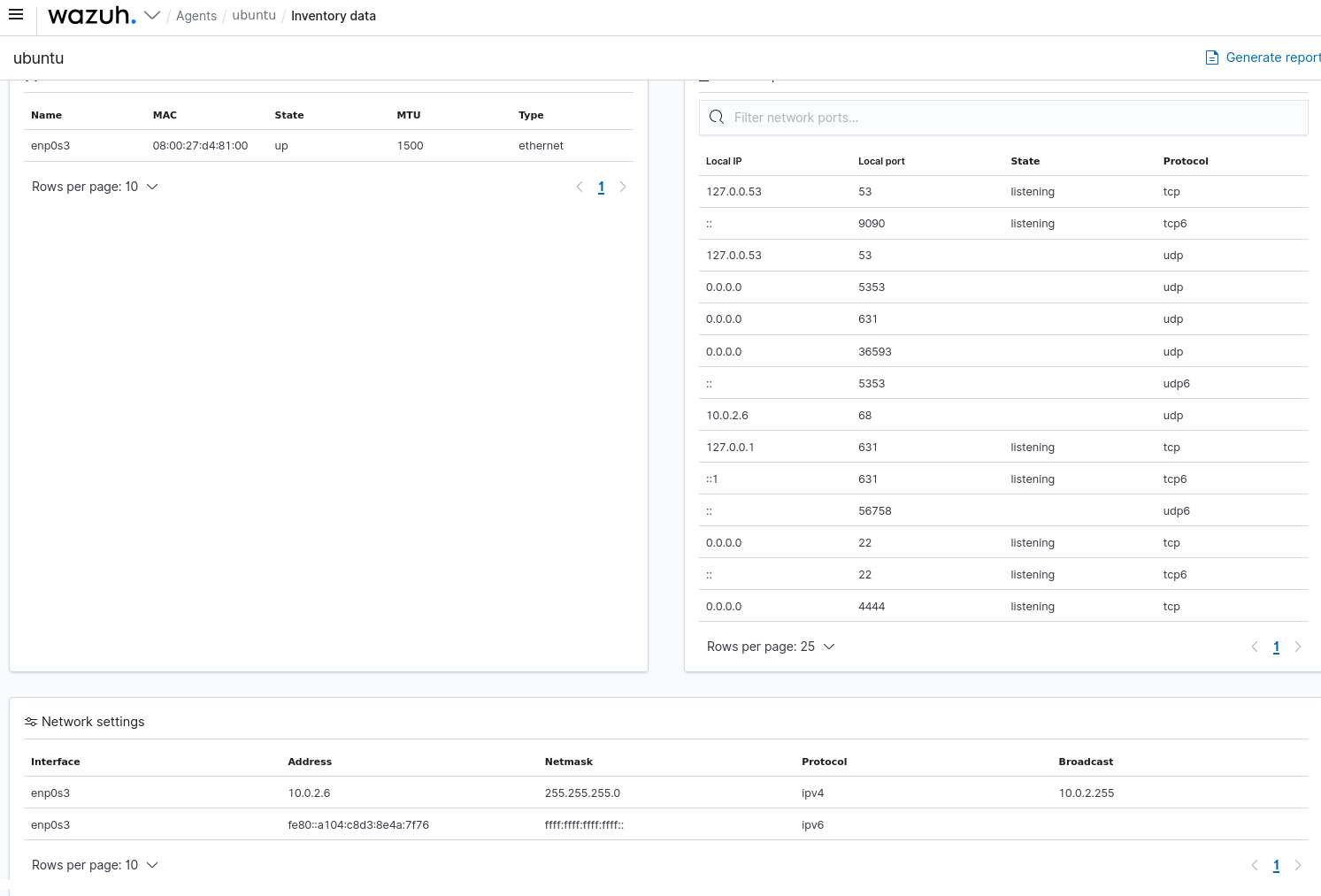
- by reviewing the server’s network activity tab, we can observe that a suspicious port is in use
- port 4444
- associated with. Metasploit Framework
6. Confirming the Findings
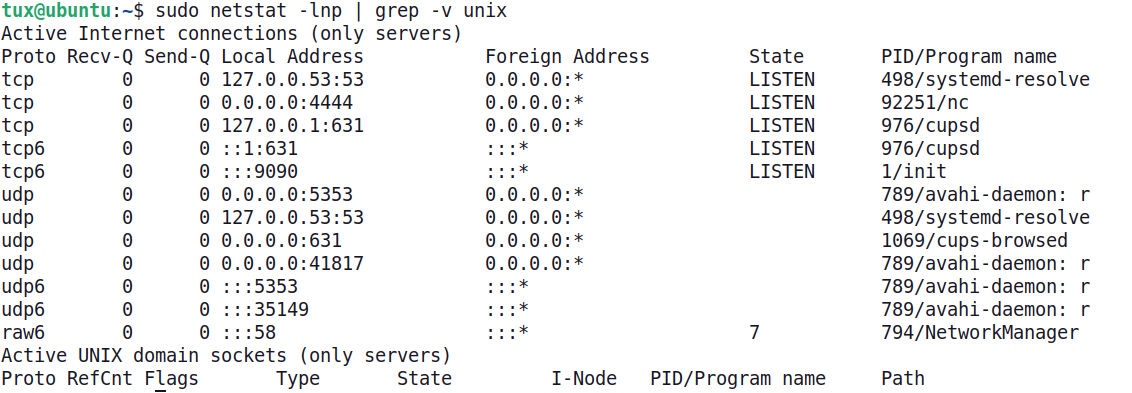
- The suspicious port shown by the SIEM can be confirmed by using the
netstat (or ss) command on the server
- Notice the application associated with port 4444 (it’s
netcat)
7. Summary of the Event
- In this example, we see a common pattern of events that is a clear indicator of compromise (IoC)
- A password attack was launched against a server and was successful
- attacker used the account to gain access to the server
- because the account had privileged access, was able to quickly create a new account
- attacker created a backdoor using netcat to provide access in case the breach account password was reset and the new account was removed