Hypervisor
A hypervisor is software that facilitates virtualization of multiple operating systems on a single physical computer.
- OSs installed under the hypervisor are called virtual machines (VMs) or guest OSs
- OS expects exclusive access to resources such as the CPU, system memory, storage devices, and peripherals
- hypervisor emulates these resources and mediates access to the actual system hardware to avoid conflicts between the guest OSs
- allows one physical server to run multiple virtual machines
- enables a VM to run on any physical server
- VMs must be provided with drivers for the emulated hardware components
- hypervisor emulates these resources and mediates access to the actual system hardware to avoid conflicts between the guest OSs
- might be limited in terms of the different types of guest OSs it can support
- enables moving VMs from one physical server to another
- good for high availability
- components can be changed without need for in-person maintenance
Types of Hypervisor
Type 1
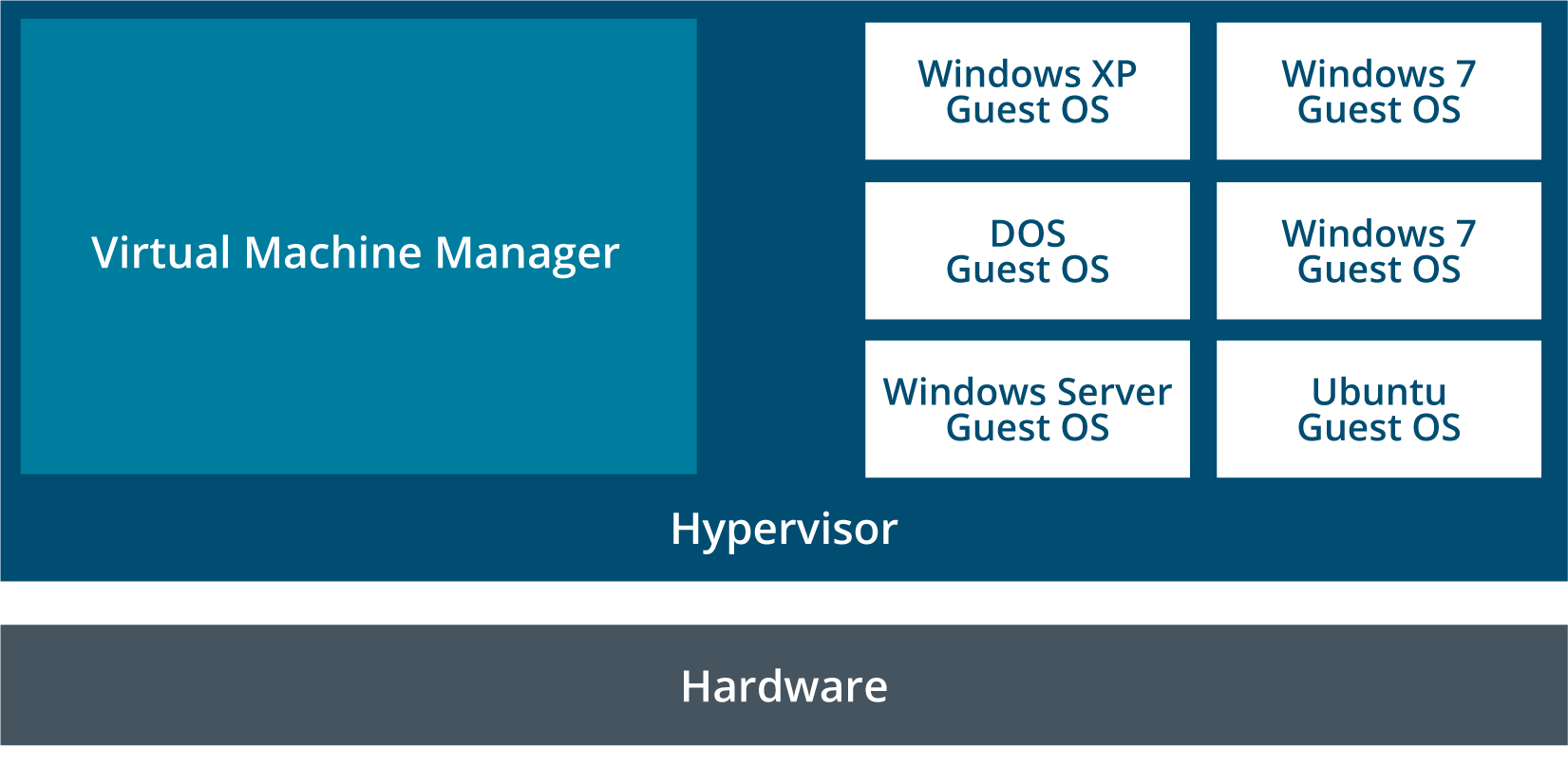
- aka bare metal virtual platform
- hypervisor is installed directly onto the computer and manages access to the host hardware without going through a host OS
- hardware needs to support only the base system requirements for the hypervisor plus resources for the type and number of guest OSs that will be installed
- enables efficient use of resources
- need to use remote management tool to interact with it
- provides a GUI containing details of the servers running and a means to configure them
- E.g.,
- VMware ESXi® Server
- Microsoft’s Hyper-V®
- Citrix’s XEN Server
Type 2
- aka guest OS virtualization
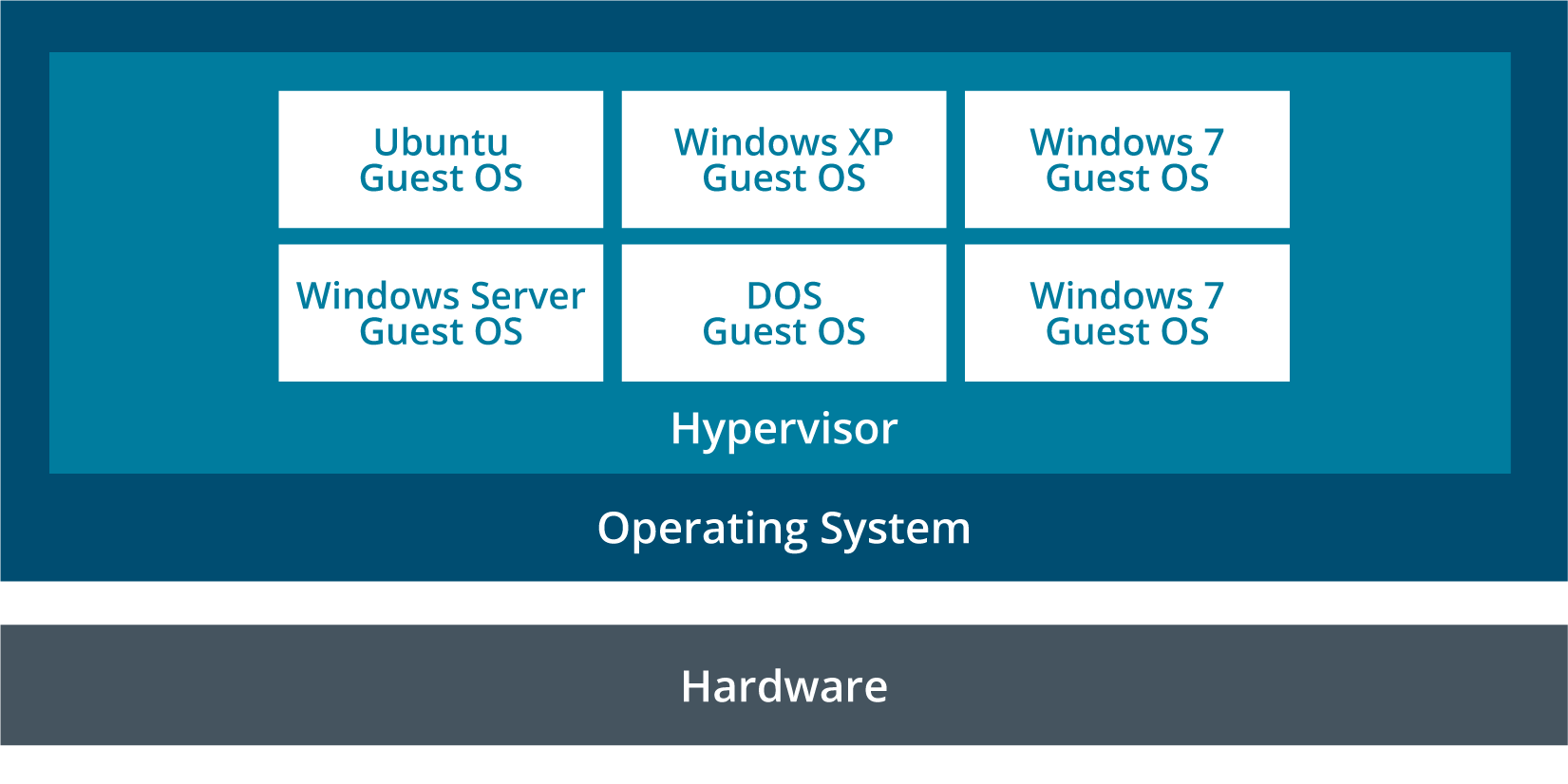
- hypervisor application is itself installed onto a host OS
- used in a guest OS (or host-based) system
- must support the host OS
- computer must have resources to run the:
- host OS
- hypervisor
- and guest operating systems
- E.g.,
- VMware Workstation™
- Oracle® Virtual Box
- Parallels® Workstation