Fiber Optic Connector Types
- The core of a fiber optic connector is a ceramic or plastic ferrule that ensures continuous reception of the light signals
- Several connector form factors are available
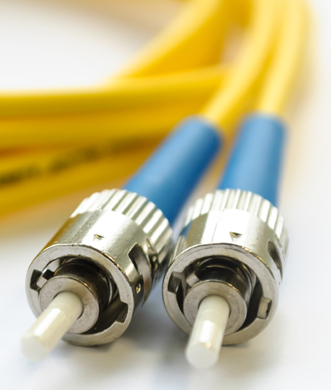
Straight Tip (ST)
Straight tip (ST) is an early bayonet-style connector that uses a push-and-twist locking mechanism.
- used mostly on older multi-mode networks
- not widely used for ethernet networks anymore
Subscriber Connector (SC)
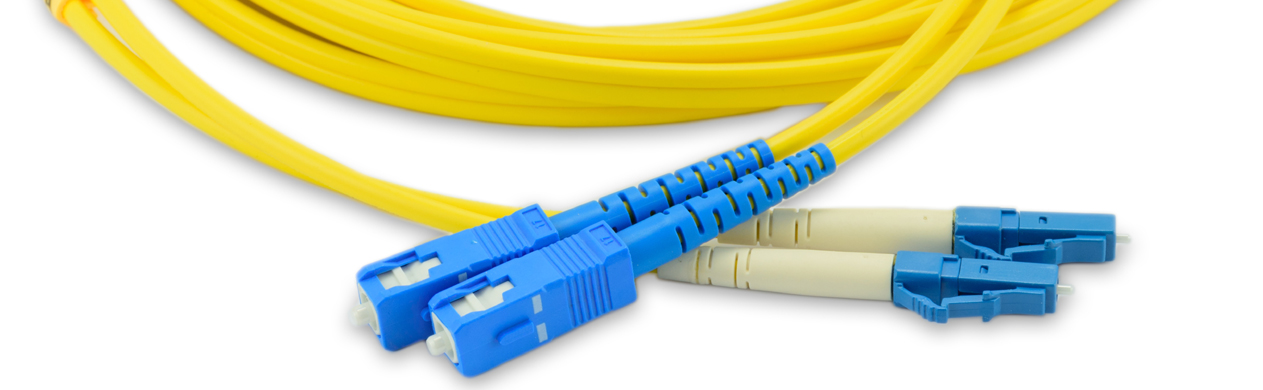
Subscriber connector (SC) is a push/pull design that allows for simple insertion and removal.
- There are simplex and duplex versions
- duplex version is just two connectors clipped together
- can be used for single- or multi-mode
- commonly used for Gigabit Ethernet
Lucent Connector (LC)
The local connector (LC) is a small-form-factor connector with a tabbed push/pull design.
- referred to as Lucent Connector
- similar to SC, but smaller
- small size allows for higher port density
- widely adopted for Gigabit Ethernet and 10/40 GbE
Multi-Fiber Push On Connectors
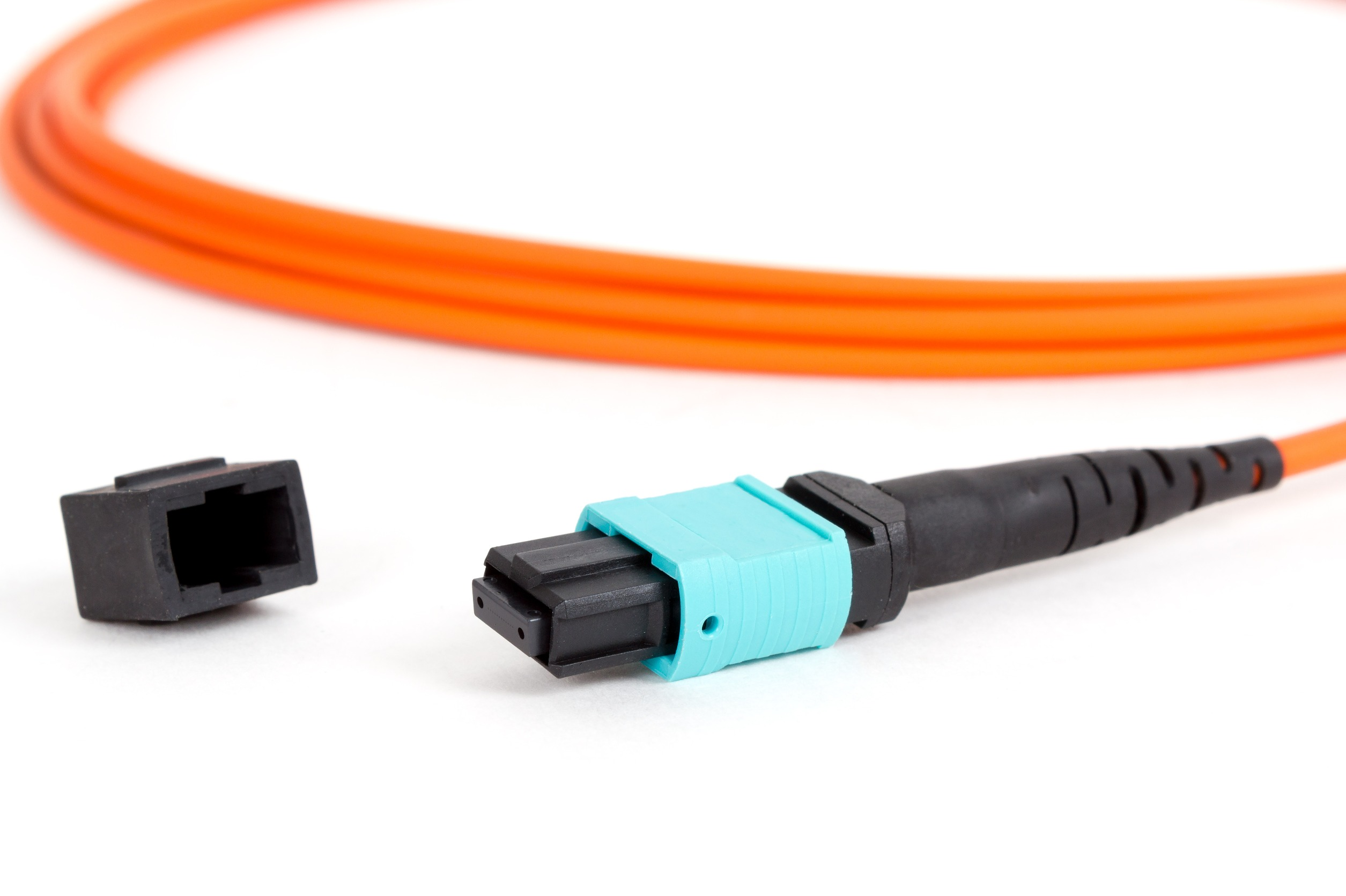
Multi-fiber push-on (MPO) termination allows for low-footprint backbone or trunk cabling.
- MPO backbone ribbon cable bundles 12+ strands terminated to a single compact ferrule
- usually prefabricated and not typically field terminated
- MMF and SMF variants
- used to aggregate 10 Gbps or 25 Gbps lanes into a 40 Gbps, 100 Gbps, or 400 Gbps parallel optical link
- each lane requires two fiber strands (send and receive)
- E.g., 40 Gbps link comprising 4 x 10 Gbps lanes requires 8 strands
- MPO terminates this type of parallel optical link more efficiently than LC-terminated strands
- MPO connector carrying 24 or 32 fibers has same footprint as duplex LC pair
- strands are color-coded when there are multiple strands in a single cable