Federation
Federation is a process that provides a shared login capability across multiple systems and enterprises.
- aka federated identity management
- essentially connects the identity management services of multiple systems
- is the notion that a network needs to be accessible to more than just a well-defined group of employees
- on-premises network can use technologies such as LDAP and Kerberos
- often implemented as a Windows Active Directory network
- because the administration of accounts and devices can be centralized
- Identity provider (IdP) is the entity that provisions and authenticates identity assertions
- relying party is any member of the federation that shares resources based on authenticated identities
- handle authorization based on their own policies
Example
- e.g.,
- in business,
- a company might need to make parts of its network open to partners, suppliers, and customers
- federation means that the company trusts accounts created and managed by a different network
- in consumer world,
- user might want to use both Google Workspace and Facebook
- if Google and Facebook establish a federated network for the purpose of authentication and authorization
- then the user can log on to Facebook using their Google credentials or vice versa
How Federation Works
- When implementing federation,
- authentication and authorization design has:
- more constraints
- web apps may not support kerberos
- additional requirements to ensure interoperability between different platforms
- third-party networks might not support direct federation with AD
- more constraints
- requires use of standard protocols or frameworks for interoperability between web applications
- authentication and authorization design has:
- interoperable federation protocols use claims-based identity
-
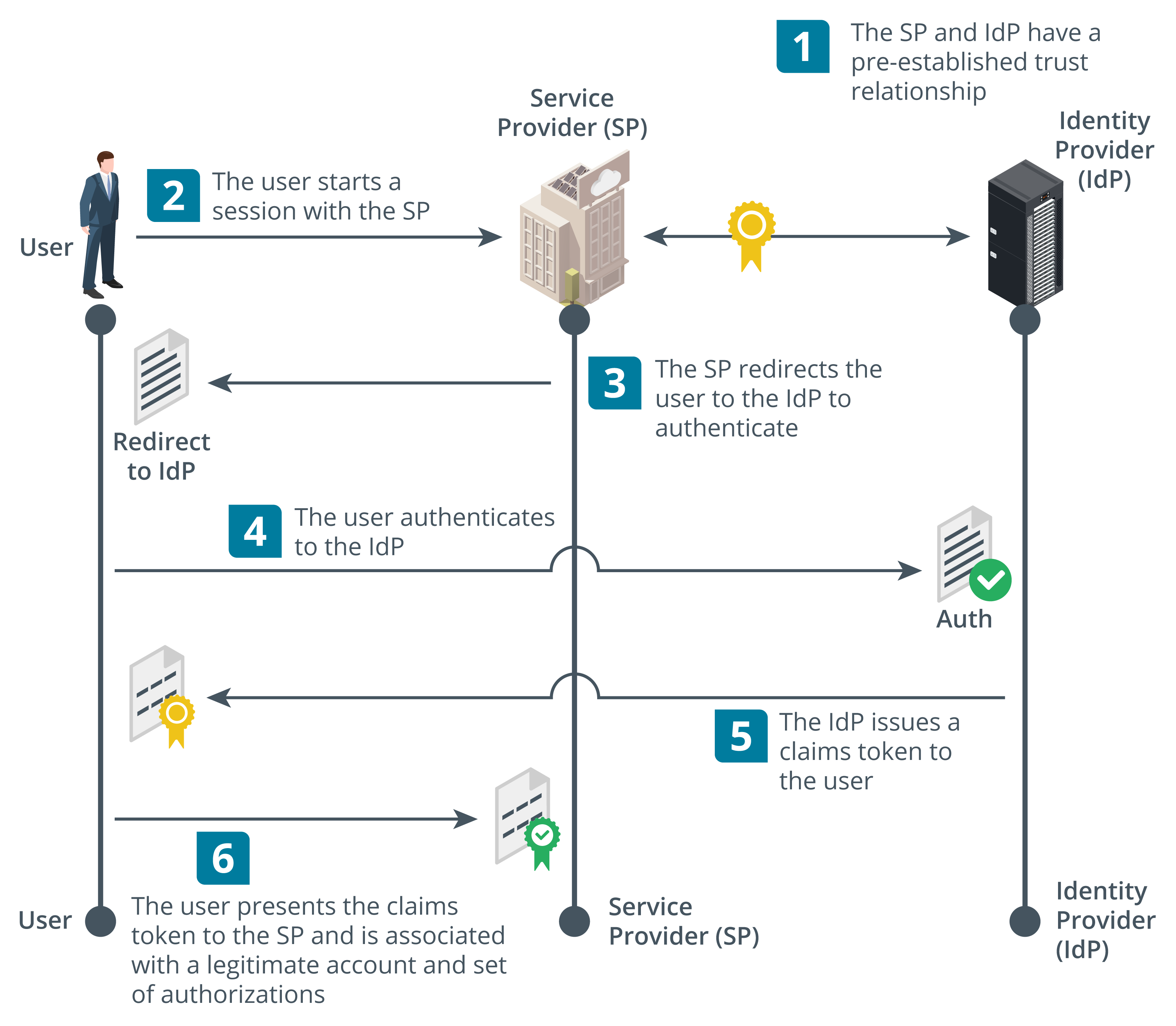
overall model is similar to that of Kerberos SSO:
- A service provider (SP) establishes a trust relationship with an identity provider (IdP)
- The principal attempts to access a service provider
- The service provider redirects the principal to the IdP
- The principal authenticates with the identity provider
- If authentication is successful, the principal obtains a claim, in the form of some sort of token or document signed by the IdP
- The principal presents the claim to the service provider
- SP can validate that the IdP has signed the claim because of its trust relationship with the IdP
-
service provider can now connect the authenticated principal to its own accounts database
- to determine permissions and other attributes
- may be able to query attributes of the user account profile held by the IdP
- if principle has authorized this type of access
-
- federated network or cloud needs specific protocols and technology to implement
- user identity assertions
- transmit claims between the principal, the service provider, and the identity provider
Trust
In planning authentication and authorization, a trust model defines the relationships between authentication services so that they may accept each other’s assertions of users’ identities and permissions, when appropriate.
- Trust models determine how organizations establish relationships among authentication services to authorize different users and groups access to various resources
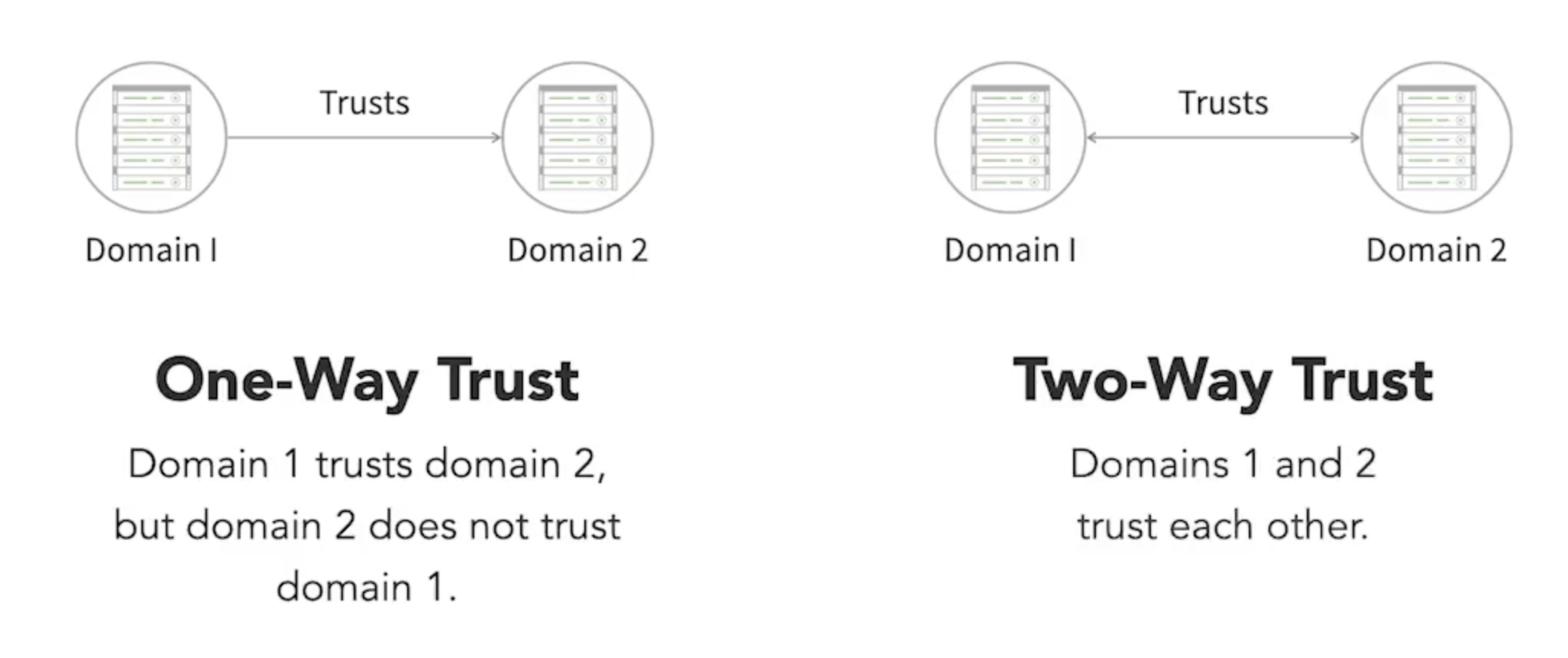
- Trust relationships across different authentication domains are described in terms of:
- direction
- one-way
- or two-way
- transitivity
- trust relationships transfer across domains
- either transitive or nontransitive
- in nontransitive trust, domain admin must explicitly trust other domain
- e.g.,
- if domain 1 trusts domain 2
- and domain 2 trusts domain 3
- then domain 1 will trust domain 3
- peer trust models avoid a single point of failure
- but are more complex
- Active Directory can implement peer trust between domains
- direction