Diamond Model of Intrusion Analysis
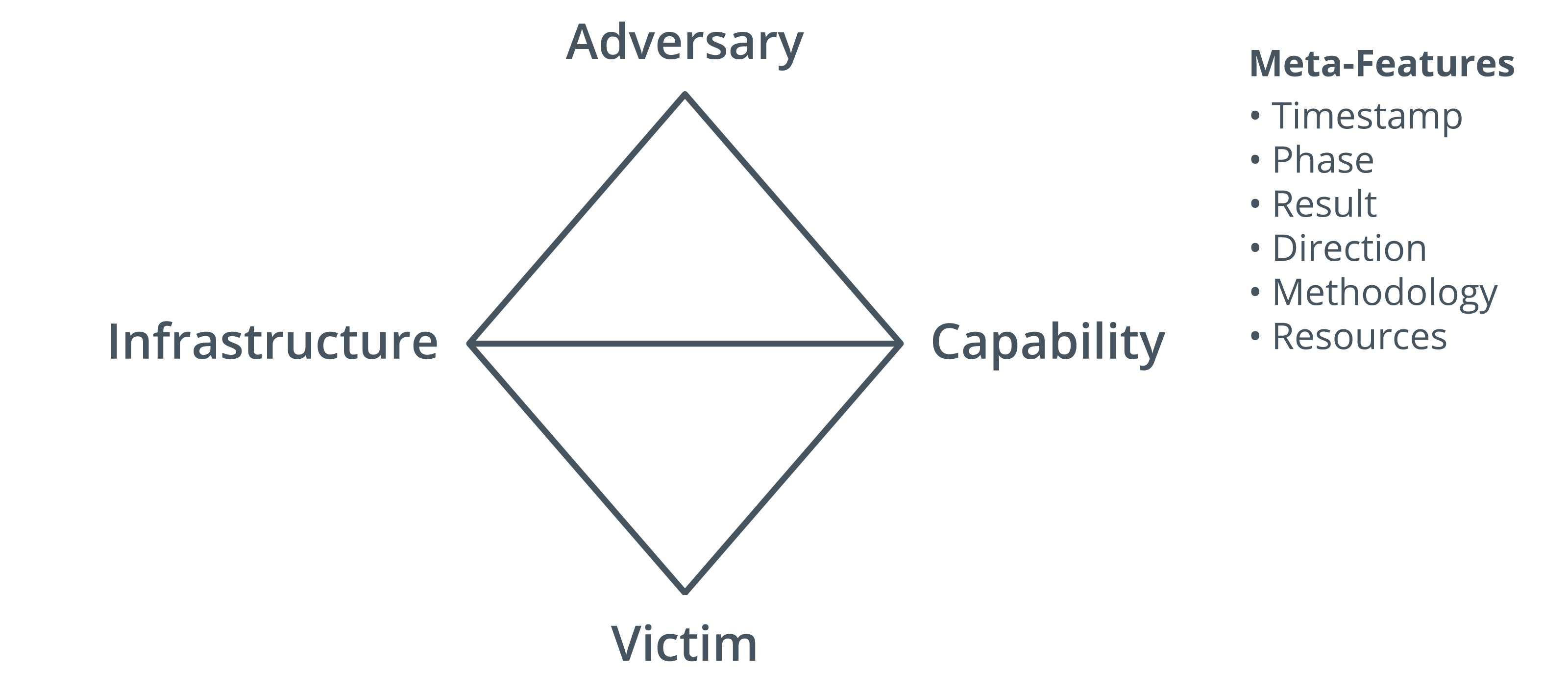
The Diamond Model of Intrusion Analysis is a framework to analyze an intrusion event (E) by exploring the relationships among four core features: adversary, capability, infrastructure, and victim.
- set out in a paper by Sergio Caltagirone, Andrew Pendergast, and Christopher Betz
- difficult to apply to manual pen and paper analysis
- but used to develop automated threat intelligence analysis engines
Diamond Model of Intrusion Analysis
Four Features
- Adversary
- represents the attacker
- Infrastructure
- refers to the tools and resources used by the adversary to carry out the intrusion
- e.g., malware, exploit kits, C&C servers, etc.
- Capability
- describes the technical skills and aptitude of the adversary
- e.g., ability to craft advanced techniques to
- evade detection
- exploit vulnerabilities
- persist on target systems
- e.g., ability to craft advanced techniques to
- describes the technical skills and aptitude of the adversary
- Victim
- represents the organization or individual targeted by adversary
How it Works
- the four features are represented by the four vertices of a diamond shape
- each event may also be described by meta-features
- e.g., date/time, kill chain phase, result, etc.
- each feature is also assigned a confidence level (C)
- indicates data accuracy or the reliability of a conclusion or assumption assigned to the value by analysis
- each even is defined by tuples
- additional information about each feature is nested:
E = { {Adversary,C(adversary)},

     {Capability,C(capability)},

     {Infrastructure,C(infrastructure)},

     {Victim,C(victim)} = {

                       {IP,C(ip)},

                       {Port,C(port)},

                       {Process,C(process)}

                      },

     {Timestamp,C(timestamp)},

     { ... }

   }
- power of the model lies in the ability to pivot along the vertices of the diamond to produce a complete analysis and correlation of the IoCs that represent the event
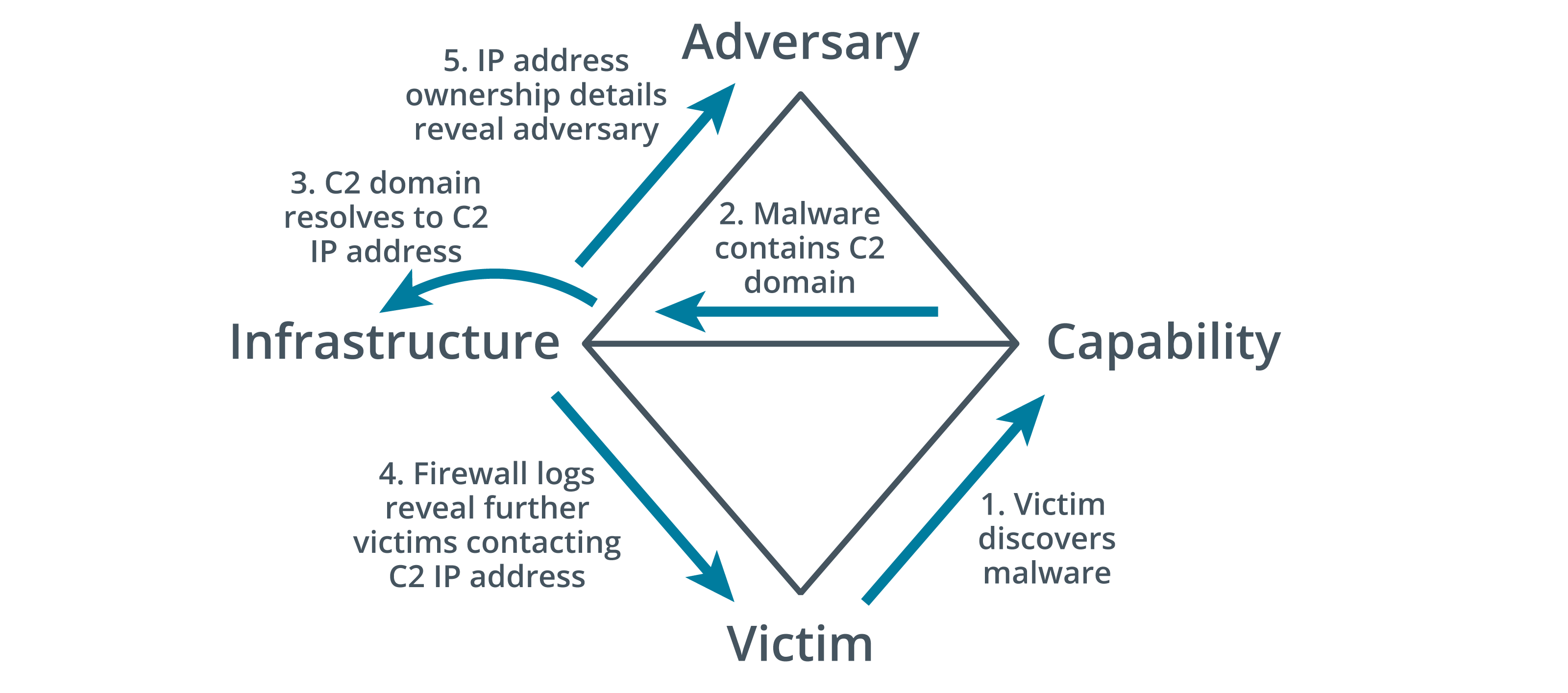
- analyzing the four features can help to better understand the TTPs used by the adversary
- help to develop effective strategies to defend against future intrusions
- can identify patterns and trends to use in improving defense
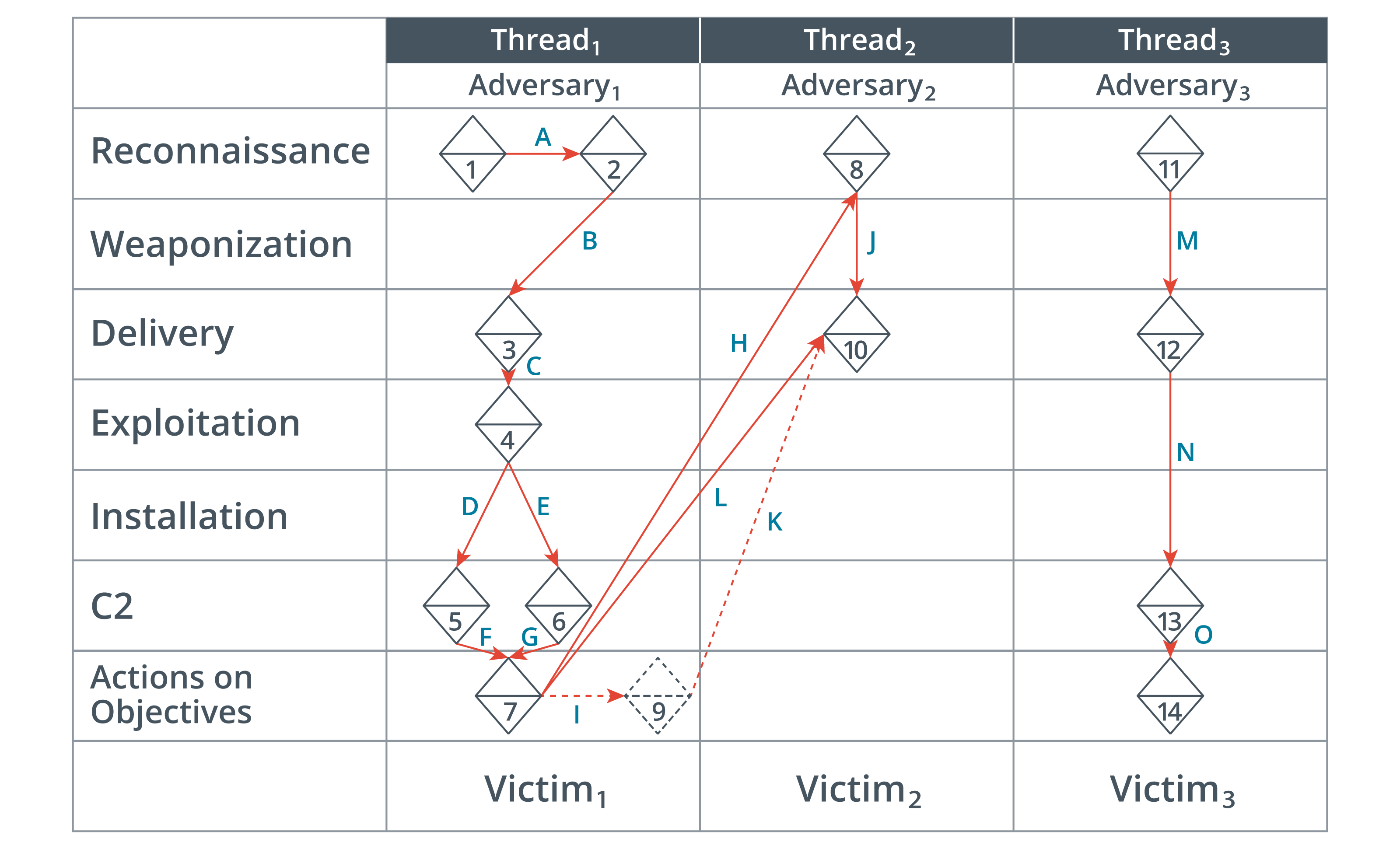
- events can be linked into attack graphs and activity threads, graphed along each vertex, representing the paths an adversary could take and those that were taken
- threads can be assigned to activity groups
- used to represent campaigns by particular adversaries
Attack Graph