DNS Hierarchy
Domain Name System (DNS) is a global hierarchy of distributed name server databases that contain information on domains and hosts within those domains.
- the top is the root
- represented by the null label (just a period
.) - 13 root-level servers (A-M)
- represented by the null label (just a period
- below the root are top-level domains (TLD)
- many types:
- generic (e.g., .com, .org, .net. info, .biz)
- sponsored (e.g., .gov, .edu)
- country code (e.g., .uk, .ca, .de)
- many types:
- DNS is operated by ICANN
- manages generic TLDs
- country codes are managed by an organization appointed by the government
- information about a domain is found by tracing the root down through the hierarchy
- root DNS servers have complete information about TLD servers
- TLDs have information about the second level domains
- no name server has complete information about all domains
- records within the DNS tell them where an authoritative name server for the missing info is found
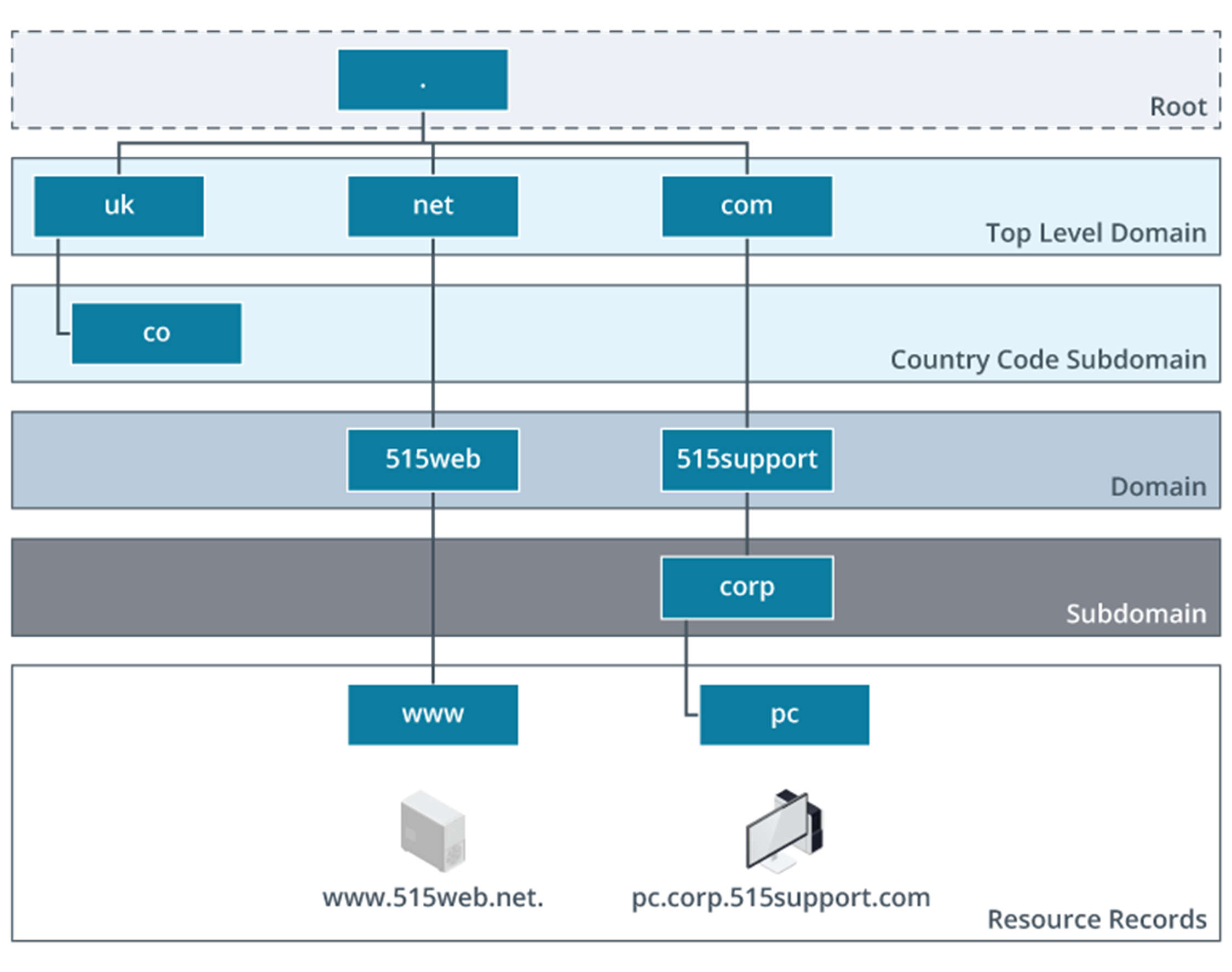
- FQDN reflects the hierarchy
- most specific on the left
- host’s resource record with its name:IP address mapping
- least specific on the right
- TLD followed by the root
- e.g.,
pc.corp.515support.com.
- most specific on the left