DHCPv6 Server Configuration
- IPv6 SLAAC process can locate the default gateway and generate a host address with network prefix automatically
- thus, DHCPv6 is often just used to provide additional option settings
- rather than leases for host IP addresses
- process of DHCP server discovery and address leasing is fundamentally the same
- but format of messages is different
- as IPV6 does not support broadcast, clients use the multicast address
ff02::1:2to discover a DHCP server - DHCPv6 uses ports 546 (clients) and 547 (servers)
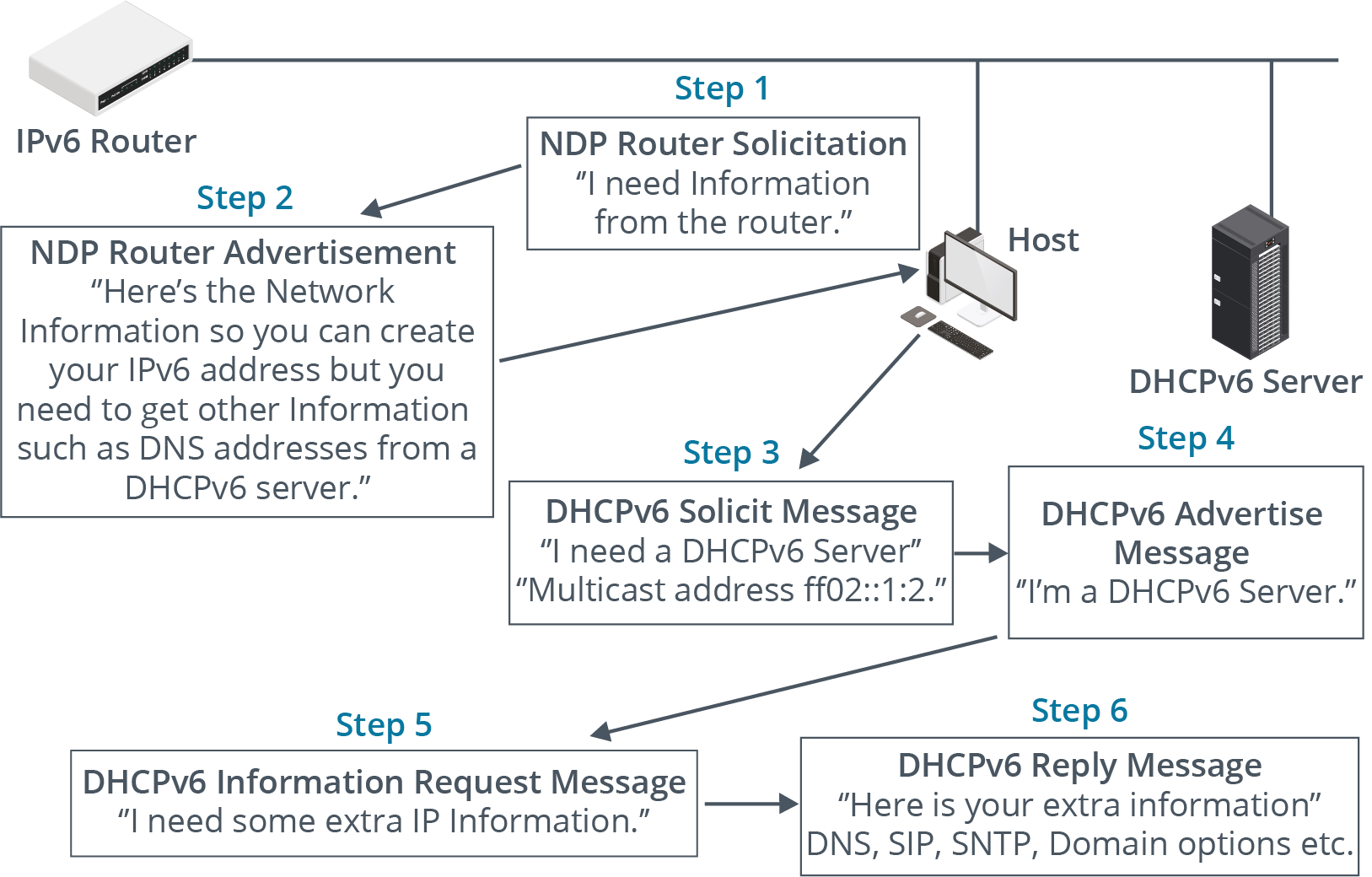
Stateless Mode
- in stateless mode, client obtains a network prefix from a router advertisement and uses it with the appropriate interface ID
- router can also set a combo of flags to tell the client that a DHCP server is available
- if so configured, client solicits a DHCPv6 server using multicast address and request additional configuration information
Stateful Mode
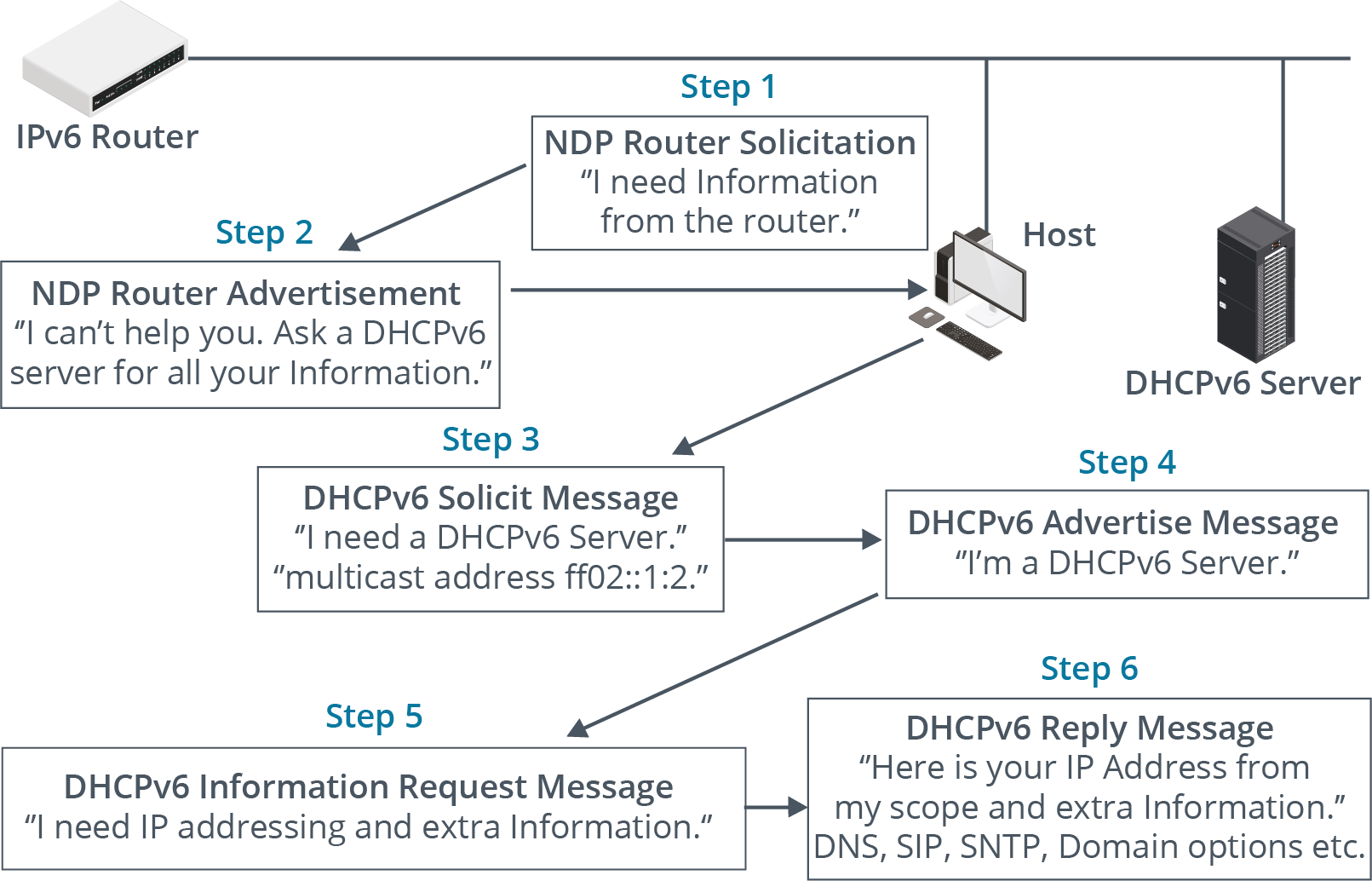
- stateful mode means that a host can also obtain a routable IP address form a DHCPv6 scope
- in both modes, DHCPv6 server can supply options information
- e.g., DNS server addresses, DNS suffix/domain lists, time servers
- to configure scope, need to define:
- the network prefix
- then any IP addresses that are to be excluded form being offered
- host must still listen for a router advertisement to obtain the network prefix and configure a default gateway
- no mechanism in DHCPv6 for setting the default route
Info
It is possible to configure a static reservation in DHCPv6
- doesn’t use a MAC address
- instead, each system generates a host DHCP Unique Identifier (DUID) plus an Identity Association Identifier (IAID) for each interface