Cloud Network Security Controls
Firewalls
- in cloud environments, security groups are typically the first firewall capability deployed
- in cloud and virtual environments, systems are often ephemeral and scale quickly
- so firewalls and rules need to account for those changes by either:
- adjusted by same code that adds systems or scaled inside the rules themselves
- or load balancers and other tools used to account for changes in the infra without requiring new rules
- firewall technologies include a broad range of solutions
- ACLs
- NACLs
- stateful firewalls
- NGFW
IDS/IPS
- designed to detect malicious traffic, alert on it, and take action
- each cloud provider has third parties that provide IDS and IPS services
- generally the same as on-prem environments, just virtualized and cloud enabled
Honeypots
- used to detect, identify, isolate, and analyze attacks
- cloud environments usually charge per IP, so running a honeypot/honeynet adds cost
- need to determine cost/value of honeypot in design
- available in cloud environments as native tools
- e.g.,
- Azure Defender for Cloud
- Amazon Inspector service
- third-party vulnerability scanners are also available from cloud provider marketplaces
- many systems are ephemeral,
- so need to ensure scanners account for the original system and any changes that occur from IaC updates
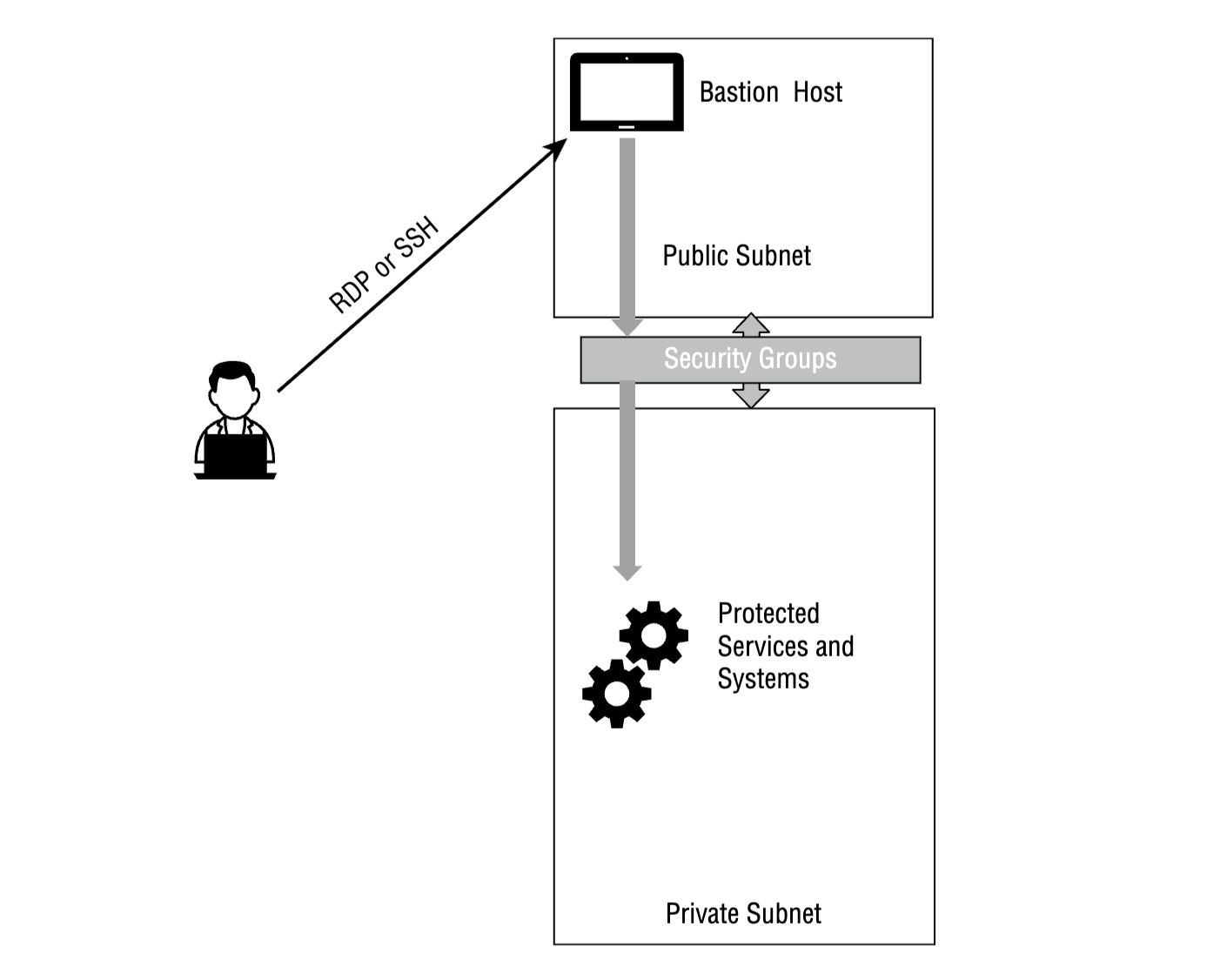
Bastion Hosts
- used to allow administrators to access a private network from a lower security zone
- has network interfaces in lower and higher security zones
- requires greater security attention
- aka jump servers or jump boxes
Identity Assurance in the Cloud and Virtual Environments
- Identity assurance challenges in the cloud:
- identity proofing is nearly impossible when allowing users to bring own identities
- e.g., identity proofing a users own Gmail account
- less of a challenge if org handles its own identity proofing through normal onboarding process
- validating that users are legitimately the person who is supposed to use the credential
- i.e., compromised credentials
- audit logs need to contain the relevant information to identify indicators