Bridge
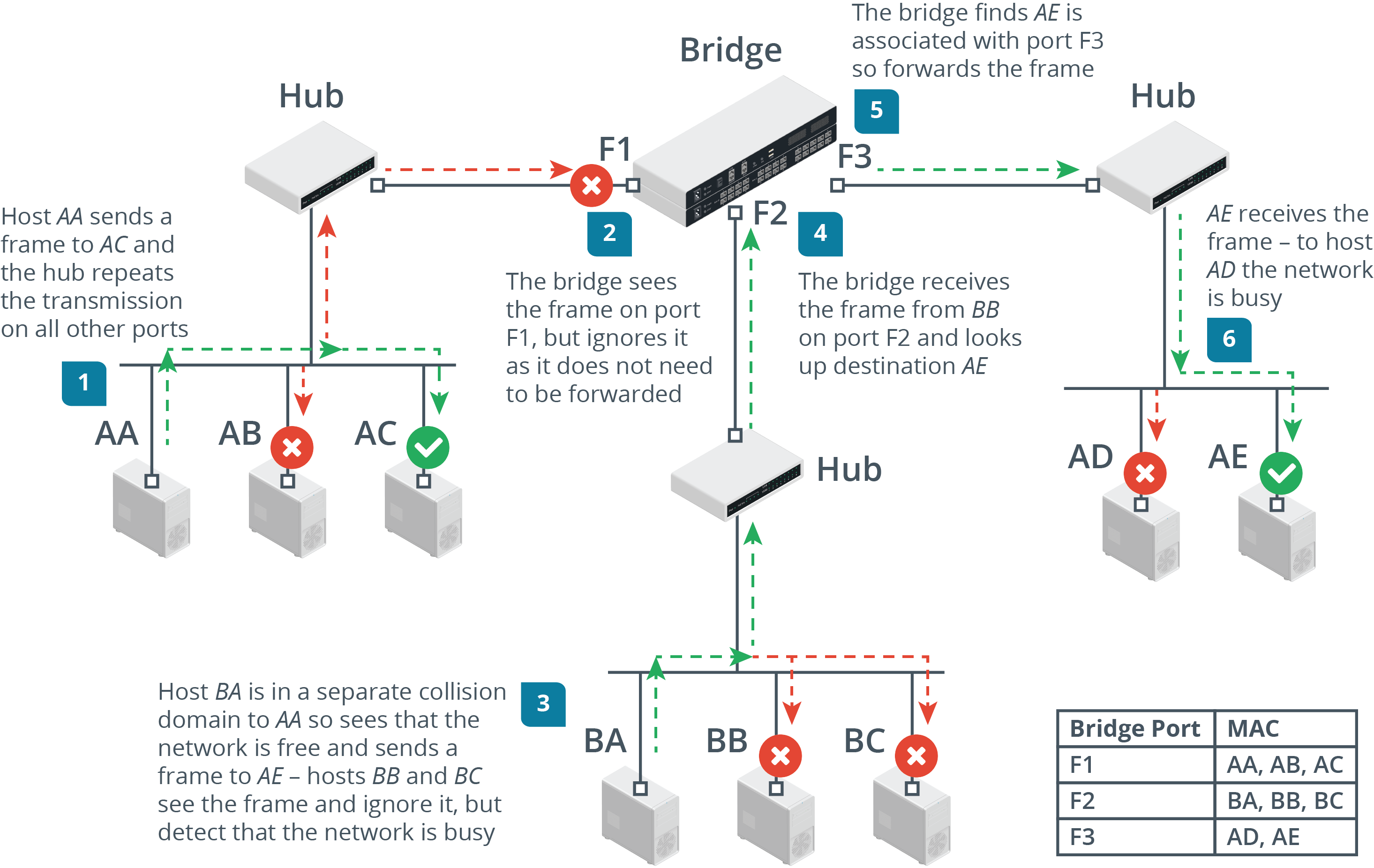
An Ethernet bridge establishes separate physical network segments while keeping all nodes in the same logical network.
- works at Data Link layer
- reduces the number of collisions caused by having too many nodes contending for access
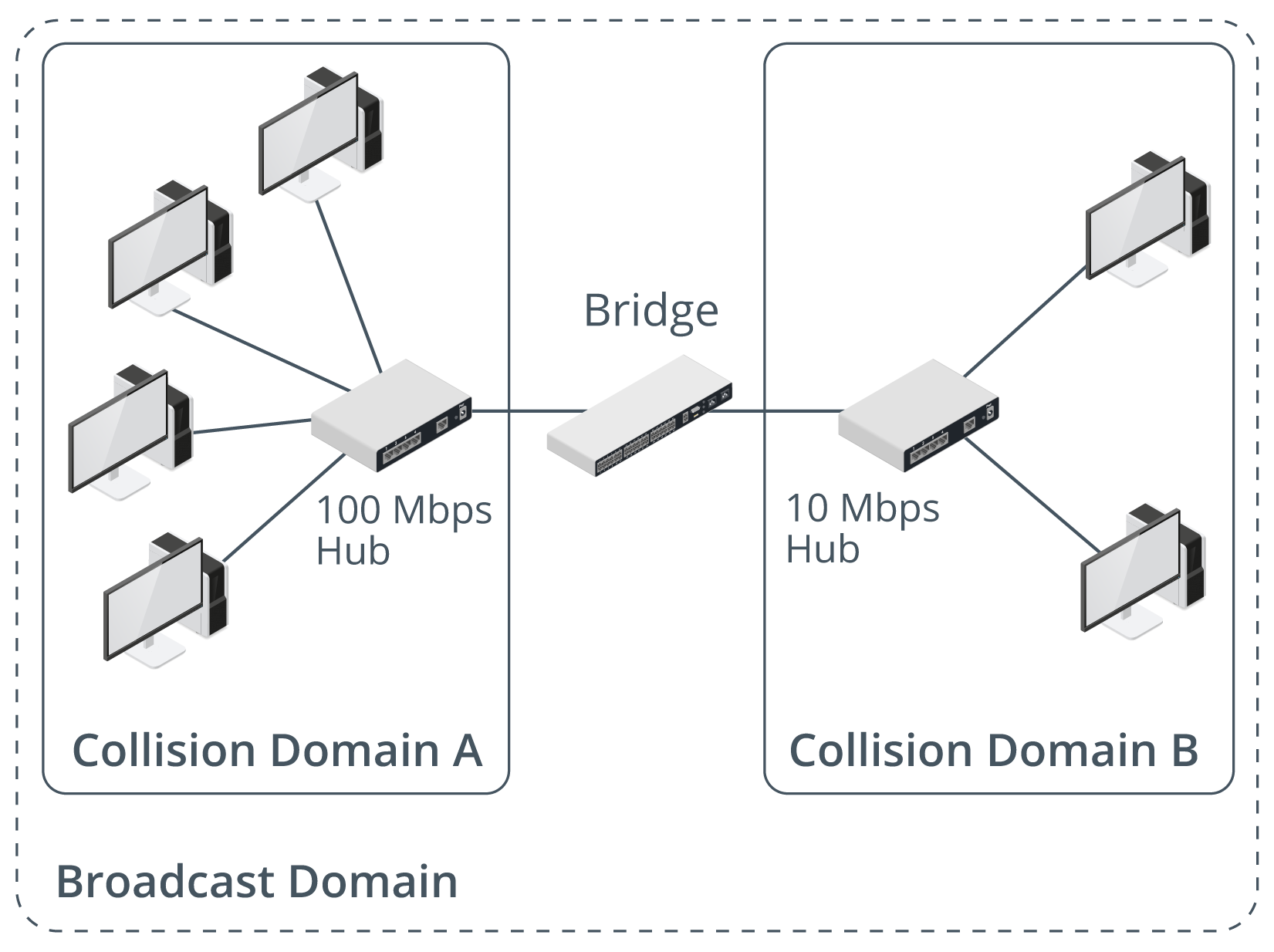
- bridge creates separate collision domains
- nodes in one segment don’t slow or contend with nodes on the other
- enables communication between the separate collision domains as an entire broadcast domain
- forwards only the right traffic
- creates a single logical network
- called a layer 2 broadcast domain
- builds forwarding database to track which addresses are associated with which of its ports
- when a bridge is initialized, the database is empty
- builds up as bridge listens to the connected segments
- entries are flushed out of the table after a period of time to ensure the information remains current
- if no record of the MAC address exists or if the frame is a broadcast or multicast:
- bridge floods the frame to all segments except for the source segments
- acts like a hub
- bridge floods the frame to all segments except for the source segments