Waterfall Methodology
Waterfall model is a sequential model for software development in which the phases of the SDLC cascade so that each phase will start only when all tasks identified in the previous phase are complete.
- follows development process sequentially
- must finish each step before moving on
- phases do not overlap
- mostly replaced by more flexible models
- but still in use for complex systems
- used for development efforts that
- involve a fixed scope
- have known time frame for delivery
- are using a stable, well-understood technology platform
- examples that use it
- software for space craft
- utility plants
Phases
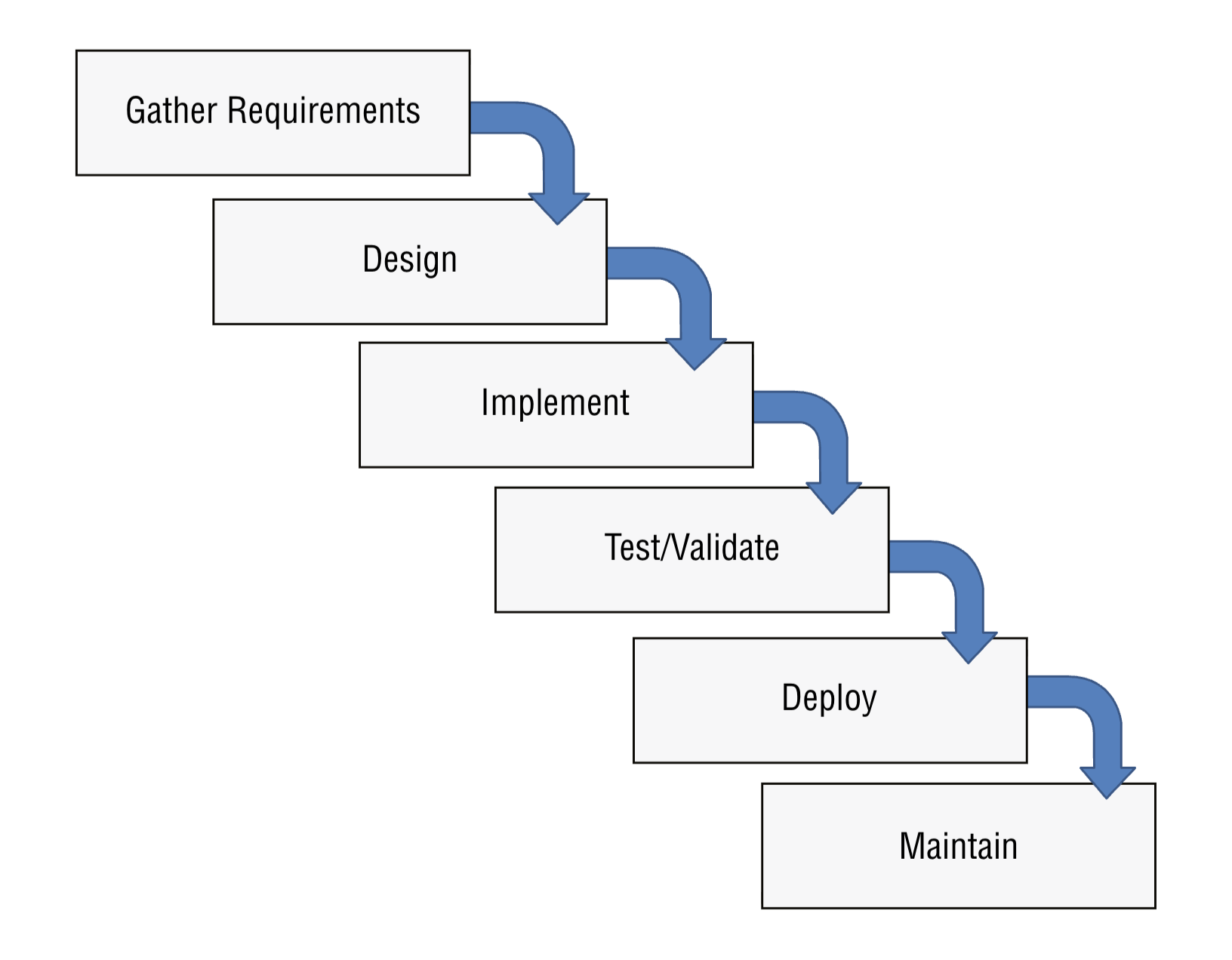
- Requirements gathering
- Define the project requirements
- Design
- Convert the requirements into design specifications
- Implementation
- Complete the necessary work
- Test/validate
- Verify that the work completed meets the requirements and quality specifications
- Delivery/deployment
- Move the product into production for customers to use
- Maintenance
- Solve issues as they arise
Strengths
- simplest framework
- easy to learn and use
- lightweight and adaptable method can be tuned to any industry or project type
- easy to measure progress
- include thorough documentation
- easier to change team members during a project
Weaknesses
- not very flexible
- whole plan is designed and laid out before the project begins
- changes to the plan or revisions to the design, then project starts over from the beginning
Use Cases
- best suited for:
- Projects with fixed requirements and no unknowns
- Projects where change costs are incredibly high later in the project
- Short, simple projects
- not a good fit for:
- Projects with unclear requirements or expected changes
- Projects with high research and discovery needs