Types of Organizational Structures
Organizational structure is the compositional makeup of an organization that dictates how the various groups and individuals within the organization interrelate.
- defines how work moves and how people form into teams in a company
- three main organizational structure types:
- functional
- projectized
- matrix
Functional Organization
Functional organizational structure is an organizational structure where reporting is hierarchical, with each individual reporting to a single manager.
- divides the organization by areas of expertise or specialization
- classic organizational tree
- a single leader with a few direct reports
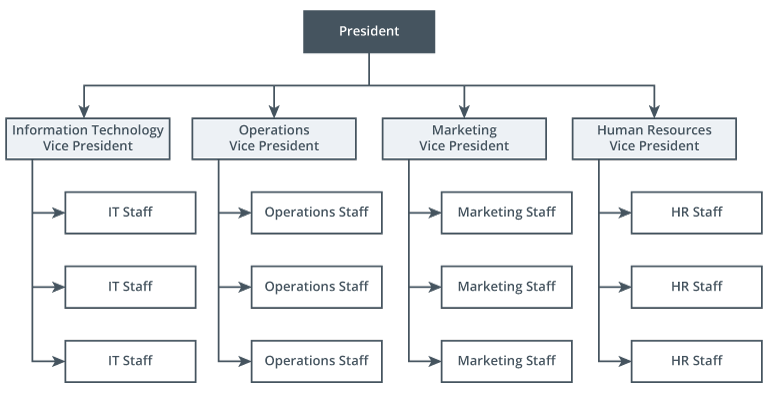
- suits small businesses
Functional managers are individuals who are part of management in the administrative or functional side, such as human resources, finances, accounting, or even procurement of the business in the organization.
- sometimes act as subject matter experts or may provide services needed for the project
- retains the budget and people management responsibilities in a functional organization
Projectized Organization
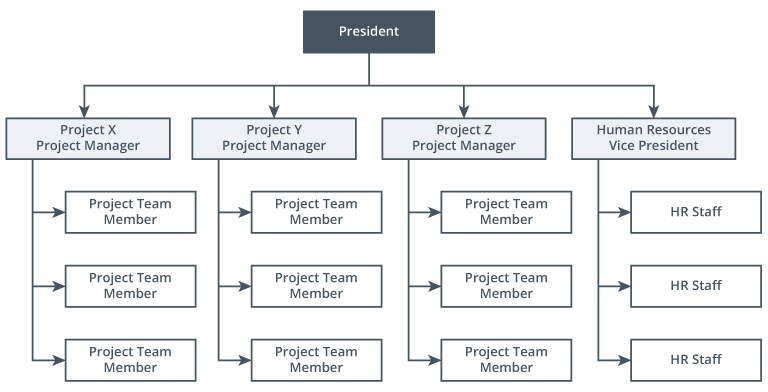
Projectized organizational structure is an organizational structure where the project manager and a core project team operate as a completely separate organizational unit within the parent organization.
- pool resources around projects
- PM leads a group of people as long as a project exists
- When the project ends, the team disbands and reforms around new projects
- might have static functional divisions that serve all projects
- looks similar to a functional organization
- but has PMs instead of specialized managers leading each team
- fewer layers and branches
- benefits companies that spend most of their resources on project work
- e.g., construction companies or event planning companies
Matrix Organization
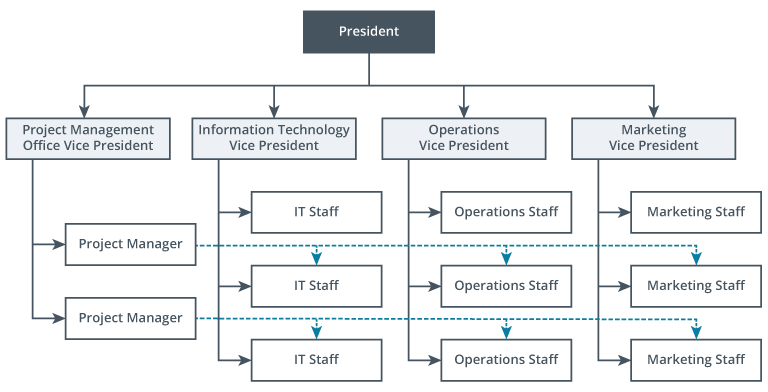
Matrix organizational structure is an organizational structure with a blend of functional and project-based structures in which individuals still report upward in the functional hierarchy, but they also report horizontally to one or more project managers.
- Most organizations are matrix organizations
- include
- functional leaders and specialized roles
- PMs and sponsors projects
- When a project forms, team members from the functional areas work on the project teams, either part-time or full-time
- visually looks like a grid
- solid line indicates the reporting structure
- dotted line indicates an indirect management relationship
- indirect manager doesn’t have people management responsibilities
- responsible for assigning work but does not have official authority over the people doing the work
- PMs share responsibilities with functional managers
Types
- Weak matrix
- functional manager retains all budget and staff management responsibilities
- PM has less control over the project
- Strong matrix
- PM has substantial control over the project
- may have management responsibilities for the budget and staff
