Team Life Cycle
Team life cycle is a sequence of stages that describe a working team’s interactions, productivity, and needs at varying maturity levels.
- represent the behaviors and norms of a team at different levels of cohesion
Tuckman’s Stages of Groups Development
The Tuckman model of Stages of Group Development describes five stages every team experiences throughout their existence: forming, storming, norming, performing, and adjourning.
- updated in 1977 by Bruce Tuckman and Mary Ann Jensen
- teams can cycle through these phases repeatedly
- team needs time to stabilize and normalize
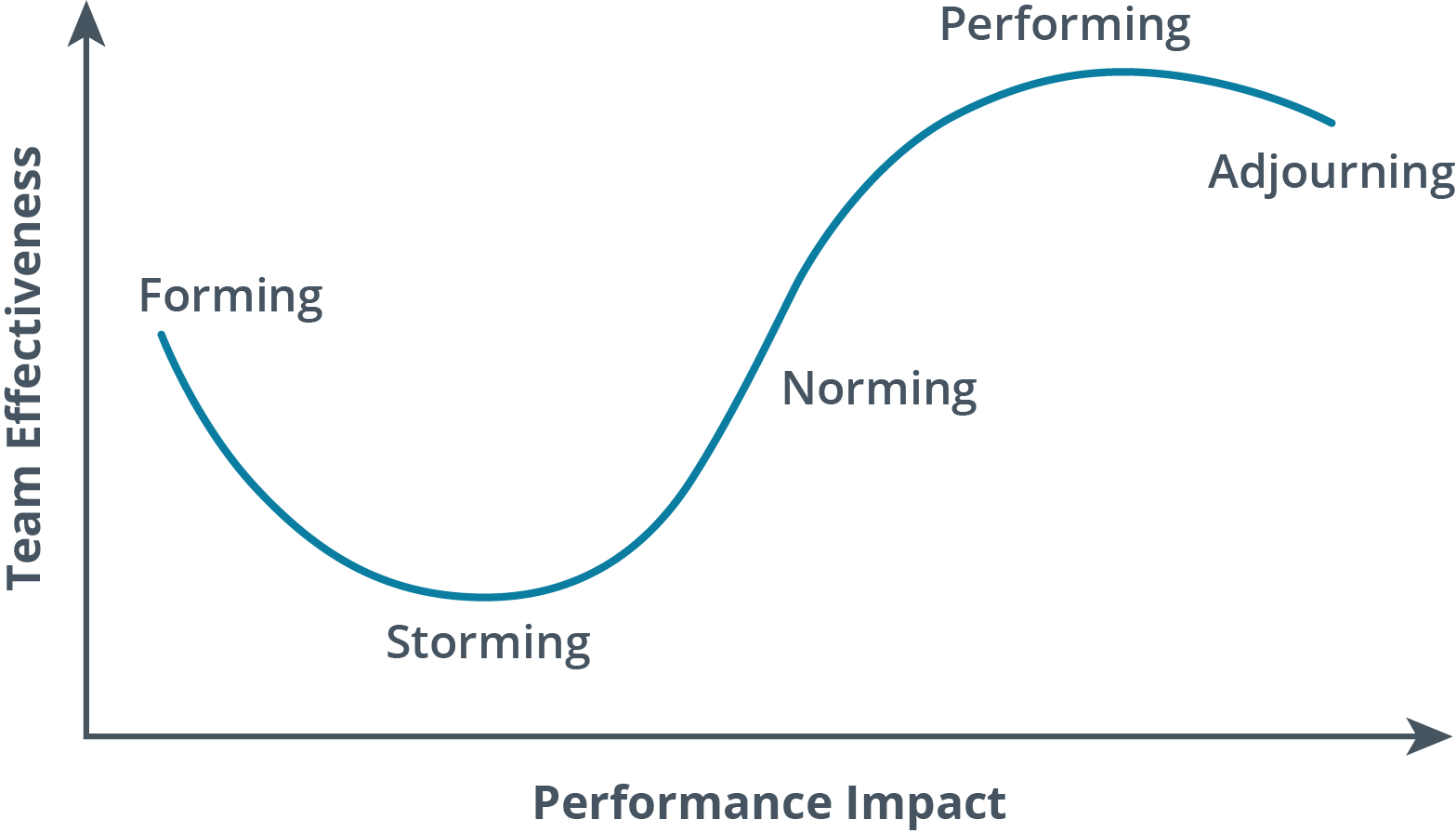
Stages
- Forming
- Storming
- Norming
- Performing
- Adjourning
Forming
Forming is the first team life cycle stage, marked by low productivity and friendly introductions.
- team members come together for the first time
- minimally productive because they are just getting started
- help the team by setting ground rules and sharing the project’s purpose and why they are working together
Storming
Storming is the second team life cycle stage, with the most conflict; individuals are competing for position and learning about each other.
- Members are figuring out their roles and finding each other’s flaws and differences
- Every little problem in the process gets amplified and questioned in this stage
- group is less productive and noticeably less polite than in the forming stage
- needs to occur because it is how teams resolve conflict and decide how to work together
- move through this stage as quickly as possible
Norming
Norming is the third team life cycle stage; marked by increased productivity and reduced conflict as teams learn how to work together.
- Conflict slows, productivity starts to increase
- team members work through their differences and respect each other
- more positive exchanges and cohesiveness
- help the team by keeping their focus relatively stable
Performing
Performing is the fourth and most productive team life cycle stage; marked by cohesion and focus on the work.
- high-performing, cohesive teams
- Productivity is highest
- team members know how to work together and what to do
- focus their energy on the work instead of competition and internal strife
- empower the teams to increase their productivity and give them recognition and rewards for a job well done
Adjourning
Adjourning is the fifth and final team life cycle stage; concluding work and preparing to disband.
- project work finishes
- team breaks apart
- members move on to new projects
- marks the official end of the team
- team members need to feel like their time was well spent
- can help the team by expressing appreciation and recognizing their accomplishments