Stakeholder Engagement
Stakeholder engagement refers to how a PM builds and manages relationships with stakeholders throughout the project.
Stakeholder engagement plan is a management strategy that is created to ensure increase in support and minimize the negative impacts of stakeholders throughout the entire project life cycle.
- PM is the primary audience
- creation requires PM to think through project’s impact and talk to stakeholders
- stakeholders will ask probing questions and challenge assumptions
- PM will benefit from these conversations
Benefits of Stakeholder Conversations
- will learn who supports your project and who opposes it
- will build more support because the stakeholders feel heard and have had the opportunity to clarify any confusion on their end
- Stakeholder conversations make the stakeholder management process collaborative
- stakeholders will feel more invested and less impacted in the project
- they’ll be more likely to support your work to others
- It extends the reach of your project in the organization
- stakeholder conversations help you refine your project messaging because you will practice a lot
- their questions could uncover new angles and considerations for your project
- builds rapport and relationships with stakeholders
- relationships you build with organizational stakeholders will help you on this project and many others in the future
Stakeholder Engagement Steps
- 4 steps
- may spread it out across other activities
- e.g., you started identifying your stakeholders when creating the project charter
- will need to finish the stakeholder analysis before finishing the communication plan
-
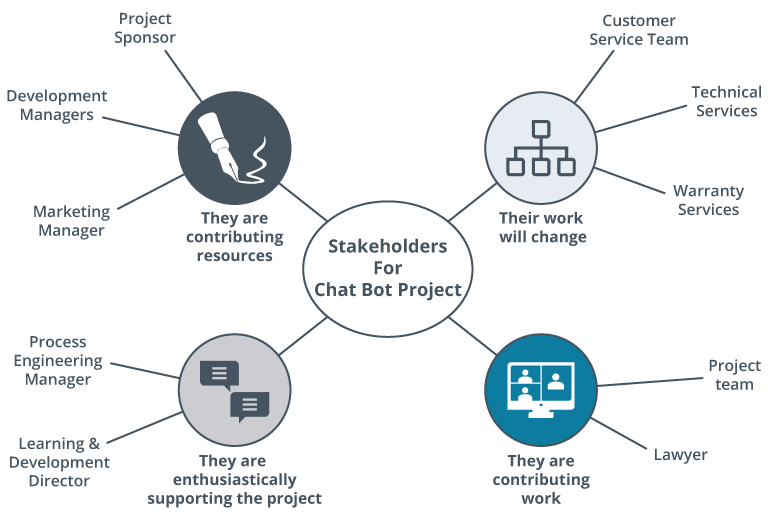
Identify the stakeholders
- create a list of all the people and groups who could be stakeholders
- Use a brainstorming approach at first
- write down every idea and refine the list later
- Summarize stakeholders into a shortlist of groups or categories
- If your stakeholder is a group, identify the person(s) who will represent the stakeholders
- project team members are also stakeholders
-
Prioritize the stakeholders
- categorize and prioritize stakeholders
- highest-priority stakeholders need frequent and active engagement
- lowest-priority stakeholders require minimal attention
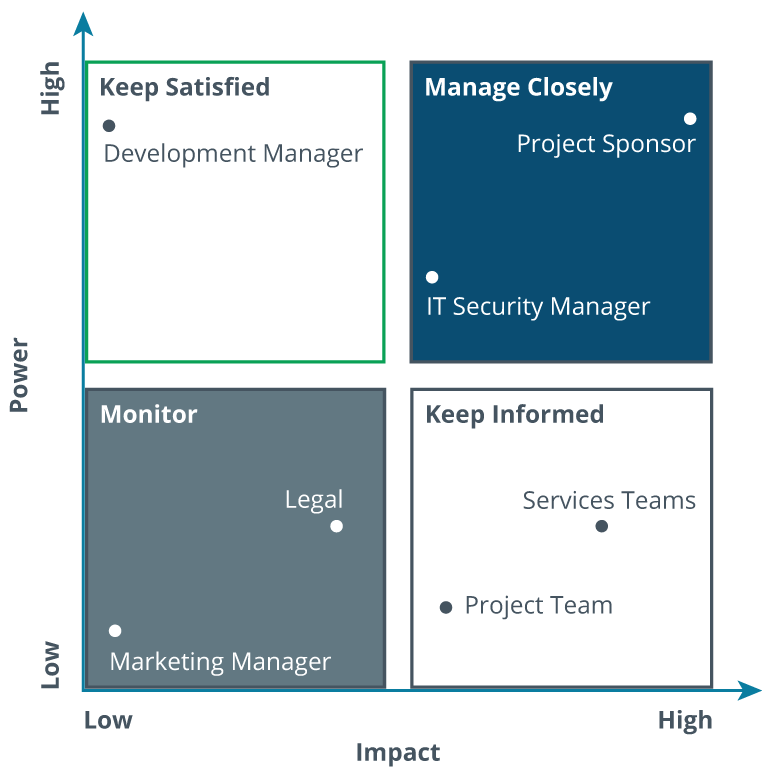
- Power/Impact Grid offers a simple approach to prioritizing stakeholders
- is a matrix chart that sets high-low values for two stakeholder variables
- measures how much stakeholders can influence a project’s trajectory and how much it will impact them
- dividing the grid into four quadrants shows how the relationship and engagement strategy changes
- grid quadrants in order of priority:
- High Power/High Impact
- have the most to gain and the most power
- important to work with them to build support and ensure they are satisfied with the project’s progress
- Their lack of support could derail a project
- High Power/Low Impact
- have enough influence that they could derail a project if they wanted
- project has little impact on them, so they might have lower interest
- Engage with them enough to ensure they are satisfied with the project
- Low Power/High Impact
- have little power to change a project, so they are less likely to disrupt it
- their work will change significantly because of the project
- Keep them informed so they feel heard and included
- Low Power/Low Impact
- have little power or impact on the project
- likely to find the lowest level of interest in this quadrant
- Monitor stakeholders in this quadrant in case they move to another grid
- will require little engagement, if any
- High Power/High Impact
-
Understand stakeholders
- talk to your stakeholders, and learn about their expectations
- Find out who is supportive, what concerns they have, and how much they know about the project
- hear out their concerns and try to address them
- Find out if resistant stakeholders are likely to move to supportive
- If they aren’t, evaluate the risk they pose to your project and how to manage it
-
Develop a stakeholder engagement plan
- summarize what you’ve learned about the stakeholders in a stakeholder register
- A document that identifies stakeholders of a project with information that includes their identification, assessment, and stakeholder classification
- describe how you will engage with them
- summarize what you’ve learned about the stakeholders in a stakeholder register
Stakeholder Engagement Plan Sections
- Stakeholder
- list the person or group
- Point of Contact
- if the stakeholder is not a person, list the person who represents the stakeholder
- Power
- list the power level from the Power/Impact Grid
- Influence
- list their impact level from the Power/Impact Grid
- Project Phase
- list the project phases that you will need to engage with them
- Engagement Needs
- describe what they need or why they are a key stakeholder
- e.g., this section could include why they strongly influence the project
- Engagement Approach
- list the type of engagement you will conduct from the Power/Impact Grid
- Methods
- capture how you will communicate with them
- Frequency
- list a descriptive term of how often you will engage with the stakeholder
- e.g., use options such as occasional, less frequent, frequent, and very frequent
| Chief Operating Officer | App Development Manager | End-Users (contact Ops Manager) | Service Teams | Legal Team | |
|---|---|---|---|---|---|
| Power - Influence | High-High | High-Low | Low-High | Low-High | Low-Low |
| Engagement Approach | Manage Closely | Keep Satisfied | Keep Informed | Keep Informed | Monitor |
| Engagement Needs | Project sponsor | Providing most of the resources | Most impacted by this project, wants release notes and training | Most impacted by this project, concerned about impact, would like Information and training | Needs to verify contracts; routine, limited engagement |
| Methods | Prefers chat or standing project status meeting | Prefers chat or standing agile meetings. Doesn’t have time for many new meetings | Webinar, external social media | Group meetings and emails | Prefers meetings |
| Frequency | Frequent | Very Frequent | Less Frequent | Frequent | Rarely |
| Project Phase | All | All | Execution, Closing | Planning, Execution, Closing | Planning, Execution |