Project Charter
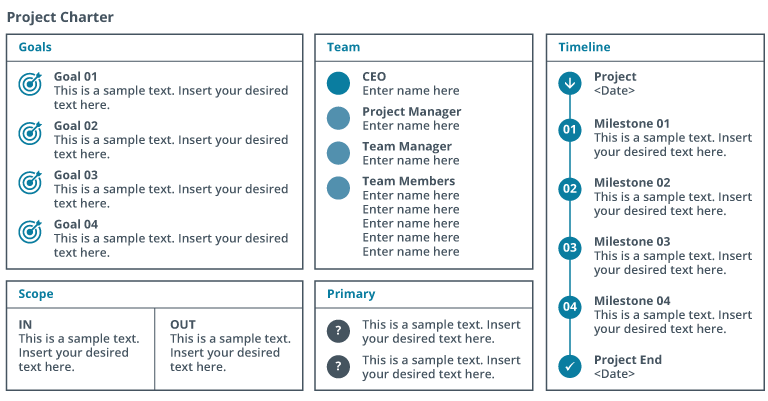
Project charter is a brief, formal document created in the project initiation phase that outlines the project parameters.
- helps the team, stakeholders, sponsor, and PM agree on why the project matters and what needs to happen
- gives a brief overview of the engagement
- subsequent files will provide more in-depth information
- e.g., charter shares high-level risks, and the risk register captures all risks and responses throughout the project
Benefits
- clarifies the project’s purpose and what stakeholders should expect
- clarifies the PM’s role and authority level
- Clarity helps the team understand operating norms, and it helps you assume responsibility for the project
- source of truth for the project
- describes the vision and direction of the entire project
- can review the charter to ensure the work aligns with the intent
Tips for Creating a Project Charter
- Use a template
- Keep the document short and simple
- use visual elements such as graphs, charts, and bulleted lists
- each element should be 3 sentences or less
- Use clear, concise language
- Collaborate with team member to create a realistic timeline and risk assessment
- review the charter drafts with your project sponsor to ensure alignment before distributing the finished product
Sections of a Project Charter
- Project charter template will vary
- every charter includes sections cover 4 categories:
- general project information
- project vision
- include fields that build a business justification and set expectations
- organization (people)
- describes the people and groups affected by the project
- implementation overview
- includes factors that will affect the project during implementation
- including budget, risks, and constraints
General Project Information
- Project Name
- Description
- Version Number and Date
- Project Manager
- Project Sponsor
Project Vision
- Objectives
- identify the specific milestones or targets
- should be clear, observable, and measurable
- you know when they have been met
- Purpose
- the business case for the project
- List organizational priorities that this project will affect
- e.g., strategic plans or enterprise-level objectives
- Preliminary Scope
- set the project boundaries, and clearly state what is in and out of scope
- List only high-level deliverables in this section
- will refine the content in the scope statement
- Success Criteria
- identify the measures of success for the project
- typically list the time, cost, scope, and quality constraints
- can include any relevant factors
- Expected Benefits
- describe how the business will change as a result of completing the project
Organization Overview
- Stakeholders
- the main stakeholders are the people who can make or break the project
- stakeholder engagement plan will list more people and groups
- look for those who will have the most influence or experience the most impact from this project
- Customers and End-Users
- describe who will either use or purchase the project’s outputs
- use a general description, such as groups, demographics, or divisions
- Note if they are internal or external to the organization
- Project Roles
- list the PM and project sponsor
- list the project board, steering committee, or other governing bodies that will oversee this project
- include high-level responsibilities
- Team Members
- list each member’s name, role, and responsibilities on the project
- Project Organization
- create a project organization chart to show the project team and reporting structure
Implementation Overview
- Timeline and Milestones
- capture a general timeline and critical milestones
- Resource Requirements
- summarize the resources you will need for the project
- Identify the labor, equipment, materials, and capital required
- Risks
- list the risks that stakeholders and sponsors will be most interested in
- risks listed here will not replace the risk register
- this will include high-impact and high-probability risks
- Assumptions and Constraints
- list the assumptions and constraints that the project will operate within
- helps manage expectations with the project sponsor and stakeholders
- constraints are known truths
- assumptions are assumed to be true
- list the assumptions and constraints that the project will operate within
- Budget
- share anticipated project costs
- doesn’t need to include an entire budget
- total figure should be accurate enough that the project sponsor and stakeholders can make an informed decision