Preliminary Scope Statement
Project scope statement defines the project and what it does and does not need to accomplish.
- expands on the scope provided in the project charter
- charter is high level and explains why the project exists
- scope statement is detailed and explains how the work will be done
- is a living document
- difference between a preliminary and a detailed scope statement is maturity
- don’t know enough to create a detailed scope statement in the initiation phase
- project team will refer to the scope statement during the planning phase
- As the team plans work and learns more, you can refine it, and the final product is the detailed scope statement
Info
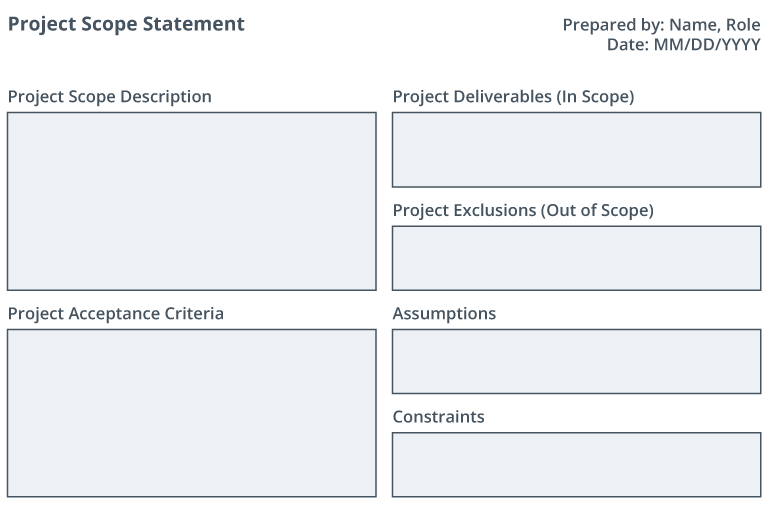
Elements of a Preliminary Scope Statement
- Project Scope Description
- summarize the project’s intent and purpose
- summarizes the project vision contents of the project charter
- Project Acceptance Criteria
- list the success criteria of the project
- Acceptance criteria are the measurable outcomes of success
- expands on the success criteria element of the project charter
- Project Deliverables (In Scope)
- set the project boundaries and identify what the team will deliver
- items listed here are in scope
- project plan will need to ensure they are completed
- Project Exclusions (Out of Scope)
- set the project boundaries
- identify what the team will not deliver
- use this as a clarification point
- identify the items most likely to cause scope creep throughout the project
- Assumptions
- list the project team’s collective assumptions about the project
- expand on the assumptions shared in the project charter
- Treat this as a living document
- update the list as assumptions are proven true or false and new assumptions arise
- Constraints
- list the known constraints and maintain the list throughout the project
- Items might move between the assumptions and constraints section
- Proven true assumptions become constraints
- unproven constraints start as assumptions
- For this reason, templates often combine assumptions and constraints into a single field