Master Data
Master data is important data about general business operations that is used frequently in analysis.
- shared by people across the organization to make critical decisions
- Some master data changes less frequently
- intended for dimension data, not transactional data
- types of master data vary by organization
- common types of master data:
- Customers
- Products
- Suppliers
- Accounts
- Employees
- Locations
- Assets
- Reference data (countries, states, status types)
- likely part of an org’s governance initiative
Master Data Management
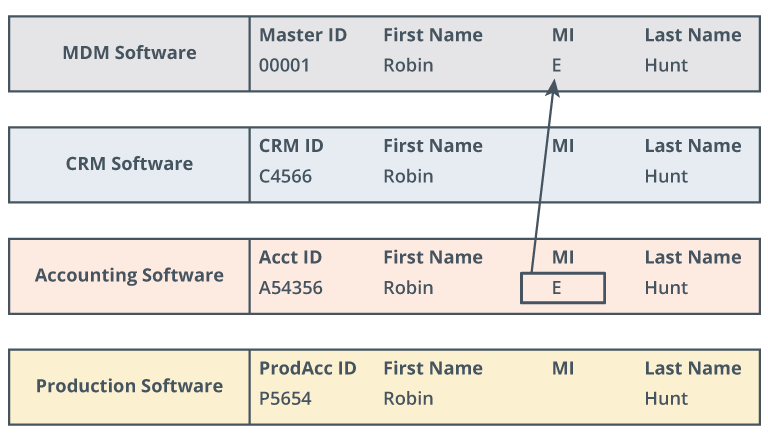
Master data management (MDM) is the tools and processes that are used to create the single source of truth or the “golden record” for the data that is considered critical at the organization.
- the management of the “master file”
- a single source of truth is important for all general business operations
- Identifying master data is one of the first steps to gaining control of the quality of data you are capturing and reporting
- data workflow diagram can help you map the lifecycle of all the data sets that occur within a company
- benefit:
- improves data quality and data integrity
- help ensure that data is managed by a set of rules and procedures
- ensures everyone in the organization is working with data that is accurate and vetted
- streamlining access to data and shortening the time to data-driven actions
- requires the consolidation of multiple fields of information
- is one way to establish a single, reliable source of truth
- Master data management tools:
- Informatica
- SAP
- IBM
- Oracle
- MDM software
- helps enable the consolidation of data from multiple systems to create one record of trust
- different from data warehouse
- both hold data that can be used by the entire organization
- both work with multiple sources of the data and increase data quality
- Master data management
- establishes a master record of data related to business operations
- maintains dimension data
- work with the data warehouse to ensure the data in the data warehouse is updated with the master data
- data warehouse
- hold the dimension data as controlled by the master data and the transactional data from the source systems
Consolidation of Records in 3 Systems to Create a Single Master Record
Reasons for Master Data Management
- helps support the transfer of data from older systems (often referred to as legacy systems) to newer, more advanced systems
- beneficial during mergers and acquisitions
- supports compliance with regulatory mandates like HIPAA, GDPR, and SOX
- by helping to identify the personal data that is collected and letting us know where this data is being used
- critical for maintaining proper security of PII
- by helping to identify the personal data that is collected and letting us know where this data is being used