Entity Relationship Model
- The data layer of the hierarchy structure will likely include entity relationship models
- provide valuable information to the teams that are required to protect and store data
- give the data governance team a bird’s eye view into the systems with data
- so they can more easily apply data classifications
Model Types
Conceptual data model is the conceptual view of what should exist in a data system and how it could be related.
Logical data model is a more detailed view of the conceptual model that includes data fields and the relationships between them.
Physical data model is the actual data system with tables, relationships, fields, and attributes.
- should lay out what version of the database you currently have in production
Entity Relationship Diagram (ERD)
Entity relationship diagram (ERD) is the pictorial representation of a database model that shows how entities (like people or objects) relate to each other through the data.
- often developed for a single system
- these diagrams provides visibility into the relationships and connections of each data set
- tools:
- Lucidchart
- diagram can directly tell you what fields you use for joins
- help you to troubleshoot information
- give you a source to verify against
The Unified Modeling Language (UML) is a general development and modeling language in software and database engineering.
Example Entity Relationship Diagram
- Diagram of The Digital High School Student Information System
- This is a physical model
- describes the exact layout of this database
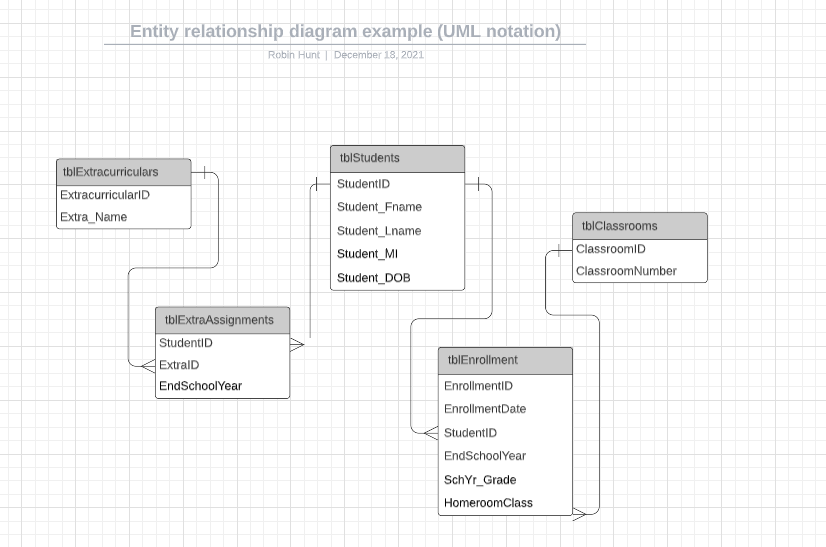
- before you have access to the database itself
- it is important to see how the database is designed to store the data
- critical that you understand:
- the rules of storing data effectively
- the rules of analyzing it effectively
- key questions ask yourself when backend data designs change:
- Have any fields been added or deleted?
- Has someone added or deleted tables/queries?
- Did the design/schema have any changes in structure where it was furthered normalized?
- Did we have any changes in the joins or relationships of the tables used in the underlying data set?