Data Lifecycle
Data lifecycle is the five stages of the life of data: create, store, use, archive, and destroy.
- Each stage has different rules and requirements related to the regulations and compliance requirements for the industry
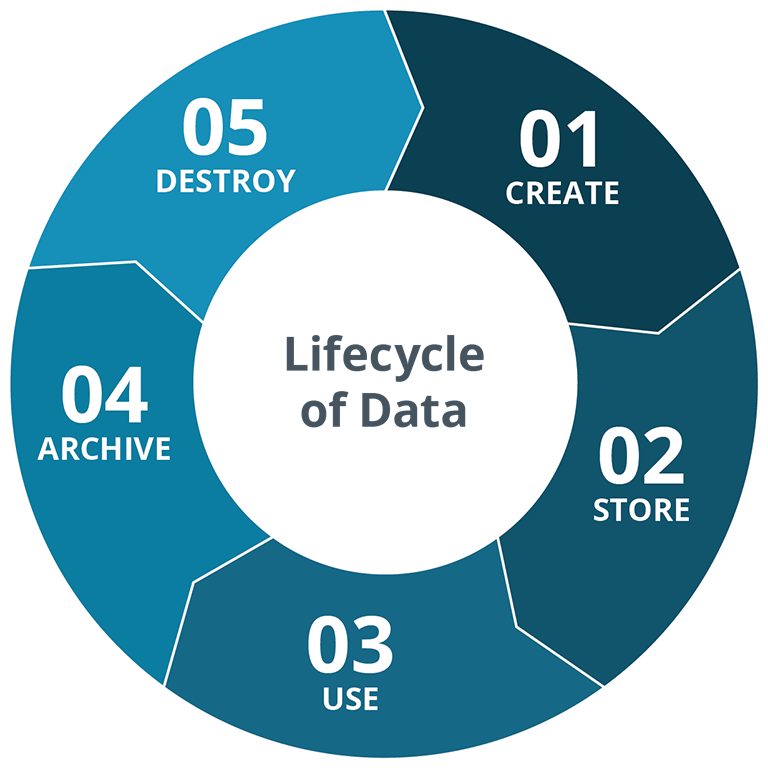
Stages
- Create
- Data is created through manual entry, software interfaces, external feeds, automated capture, databases, file systems, and many other methods
- Store
- The storage of data refers to the locations used to house data
- informs the way we protect data, give permissions, and set up data backup and recovery plans
- Use
- Data is used to support operational needs and objectives
- Data is viewed, manipulated, processed, and saved
- Data will also be overwritten, or values deleted, as needed
- Data may also be shared outside the organization
- Archive
- When data is not regularly needed, it is archived
- can still be accessed, if necessary, but it is no longer in everyday use
- Destroy
- Data that is no longer needed or required to be kept is destroyed
- Data must be authorized for destruction
- destruction methods must be legally compliant