4 basic techniques for analyzing the security of a software application:
automated scanning
manual penetration testing
static analysis
manual code review
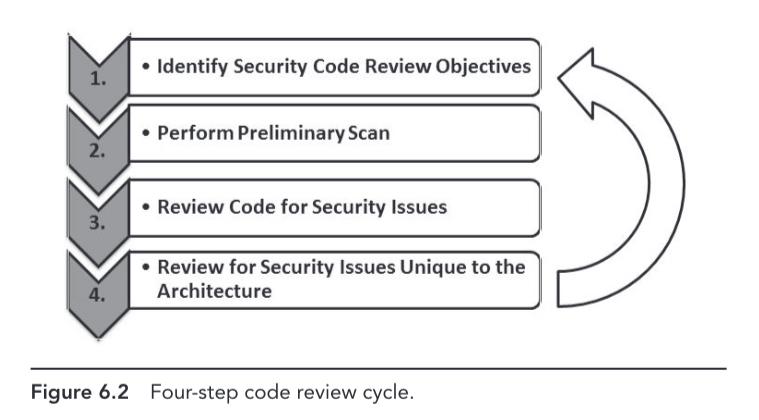
4 Step Code Review Cycle
1. Identify Security Code Review Objectives
During this step, goals and constraints are established for the review as the bases for an overall plan
review the code with specific goals, time limits, and knowledge of the issues you want to uncover
Ideal flow of activities for code review:
threat modeling
Understand code and data flows
identify high-risk areas and pain points
code reviews
document all findings and the process
resolve problems
cooperate with owners of code on applying fixes and further efforts
learn the lesson
update tools, educate development teams, improve processes, plan future iterations
For effected security code review, set goals and constraints for the following:
time
Set a time limit
helps avoid spending too much time on a single issue
Performing multiple, smaller reviews is more effective than doing one long review
types of issues
determine what types of issues you are looking for
e.g.,
general issues that affect confidentiality, integrity, and availability
issues related to application’s security quality-of-service requirements
issues related to application’s compliance requirements
issues related to the technologies your application uses
issues related to the functionality the application exposes
issues found during threat modeling
out of scope items
identify what you will not be looking for
explain why these are out of scope
2. Perform a Preliminary Scan
Static analysis is used to:
find an initial set of security issues
improve your understanding of where you will be most likely to find security issues when you review the code more fully
discover hot spots where additional security issues are likely to be discovered in later steps
typically done with:
automatic scans
manual scans
combination of both
Automatic scans
typically used to
identify low hanging fruit to create a prioritized list for further investigation
can supplement manual testing
should never replace manual testing
typically have false positives and false negatives
Manual scan
should be conducted after automatic scanning
focus on answering the following questions:
input data validation
does the app have input validation?
is validation performed on the client, server, or both?
is there a centralized validation mechanism or are validation routines spread throughout the code base?
code that authenticates and authorizes users
does the app authenticate user?
what roles are allowed, how do they interact?
is there custom authentication or authorization code?
error-handling code
is there a consistent error-handling architecture?
does the application catch and throw structured exceptions?
are there areas of the code with especially dense or sparse error handling?
complex code
Are there areas of the code that appear especially complex?
cryptography
does the application use cryptography?
interop
does the application use interop to call into native code?
3. Review Code for Security Issues
The results from step 2 are typically used to focus the analysis of the reviewer during step 3
4. Review for Security Issues Unique to the Architecture
Software security architect reviews code
Application flaws and business logic vulnerabilities require the context and understanding of a human analyst
ultimate goal of security code reviews is to find code vulnerabilities that are accessible by an attacker and that may allow the attacker to bypass a security boundary