Business Case
A business case is a brief document that justifies the investments made for a project and describes how a particular investment is in accordance with the organization’s policy.
- concise, visually appealing, and easy to read
- no standard format
Sections of a Business Case
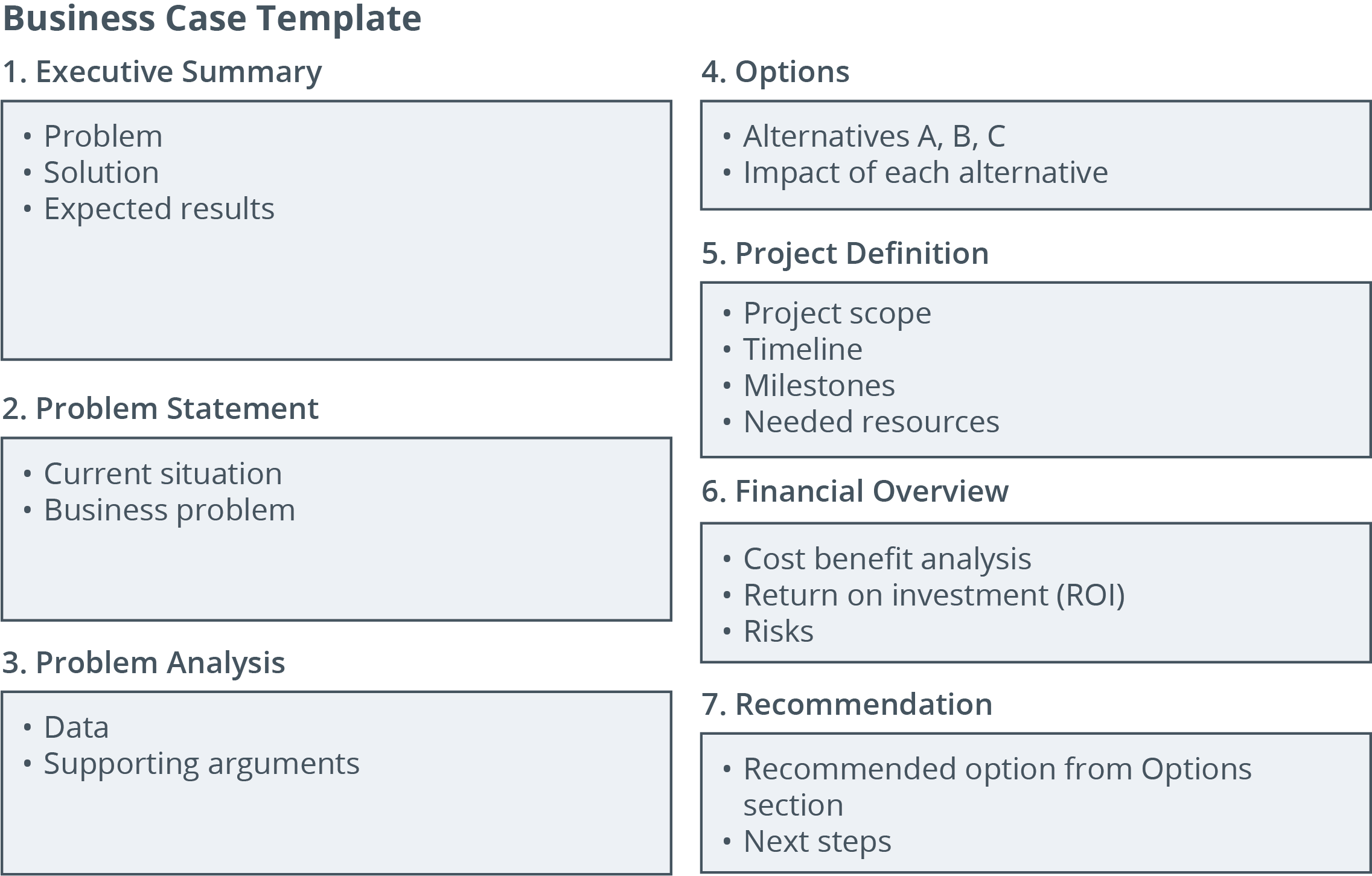
- Executive Summary
- brief synopsis of the rest of the business case
- gives an overview of the main points in just a few sentences
- usually includes a short problem statement, solution, and expected result
- write this section last
- Problem Statement
- shares more details about the problem
- presents a thorough analysis of the current situation and the business problem, opportunity, or unmet need
- describes something that will change due to this project
- Problem Analysis
- provides more context about why the project should be a priority
- support with data and supporting arguments
- can include
- historical performance data
- an environmental assessment
- or other evidence to support the business case
- Options
- describes several approaches to solving the problem
- should contain 3-5 options
- compares the solutions against each other with pros and cons
- Every business case automatically includes at least two options:
- do nothing
- describe the impact of not solving the problem
- the project you will propose in the recommendation
- do nothing
- Alternatives identification is a simple step that adds depth to the business case
- act of generating different plans for achieving project goals
- Project Definition
- Outline project scope, schedule, milestones, and resources
- Financial Overview
- Financial breakdown of cost, ROI, and risks
- contains:
- a cost-benefit analysis or return on investment (ROI) analysis
- relevant risks and assumptions
- Recommendation
- recommends best solution
- justifies why this approach is the best
- should reflect the project described in the financial overview and project definition sections