Build an Escalation Plan
Escalation plan is a formal procedure that outlines when an event should be escalated to the next level of management or technical expert and defines the people or groups to contact.
- aka escalation matrix
- describes problem scenarios that might occur in your project and how you can resolve them
- does not include specific items to escalate
- provides rules for reacting if problems arise later
- escalation plan will change more often than the rest of the communication plan throughout a project
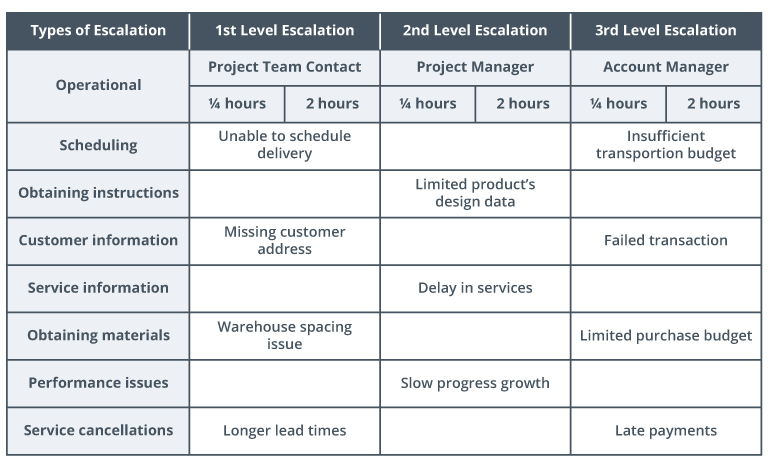
Sections of an Escalation Plan
- An escalation plan typically includes the following four fields at a minimum
- Category
- describes the type of escalation
- Level
- indicates the escalation order
- first level is the first person you would escalate to, and the escalation levels continue sequentially
- Escalation owner
- each escalation level will have one owner or role
- escalation owner is the person you will contact when you reach this level
- Trigger
- describes the conditions that initiate an escalation
- can be an observable event or a timed event
When to Use the Escalation Plan
Escalation, in the context of support procedures, incident response, and breach-reporting, is the process of involving expert and senior staff to assist in problem management.
- means that you will make another person aware of a problem in an attempt to seek resolution
- People often treat escalation as a negative event
- but is a problem-solving activity
- need to embrace appropriate escalation
| Temptation to Resist | Argument for Escalation |
|---|---|
| The problem is “almost” resolved. | If the problem existed for one day, it might be acceptable to keep working on it before escalating. However, if the problem has been “nearly fixed” for three weeks, it’s probably time to escalate. PMs need to find a balance. You don’t want to escalate every issue immediately before the team has had time to solve it. However, you don’t want to wait so long to escalate that the problem is larger than it needs to be. |
| Escalating will bring about conflict. | Escalation will create conflict at times. Fortunately, PMs are professionals at conflict resolution. The need for escalation already indicates an unaddressed conflict that will worsen over time. |
| Asking for help is admitting failure. | PMs care for the whole project, both good and bad. A PM who can recognize the need for escalation and takes the initiative to escalate problems is embracing their role. Appropriate escalation is a sure sign of a responsible, insightful PM. |
| Escalating the issue won’t help. | A generic or incomplete escalation plan won’t help. However, the PM owns the escalation plan and can improve it. |